
 PHOTOS COURTESY OF EDGERTON MAYOR BOB DAY / THE VILLAGE REPORTER
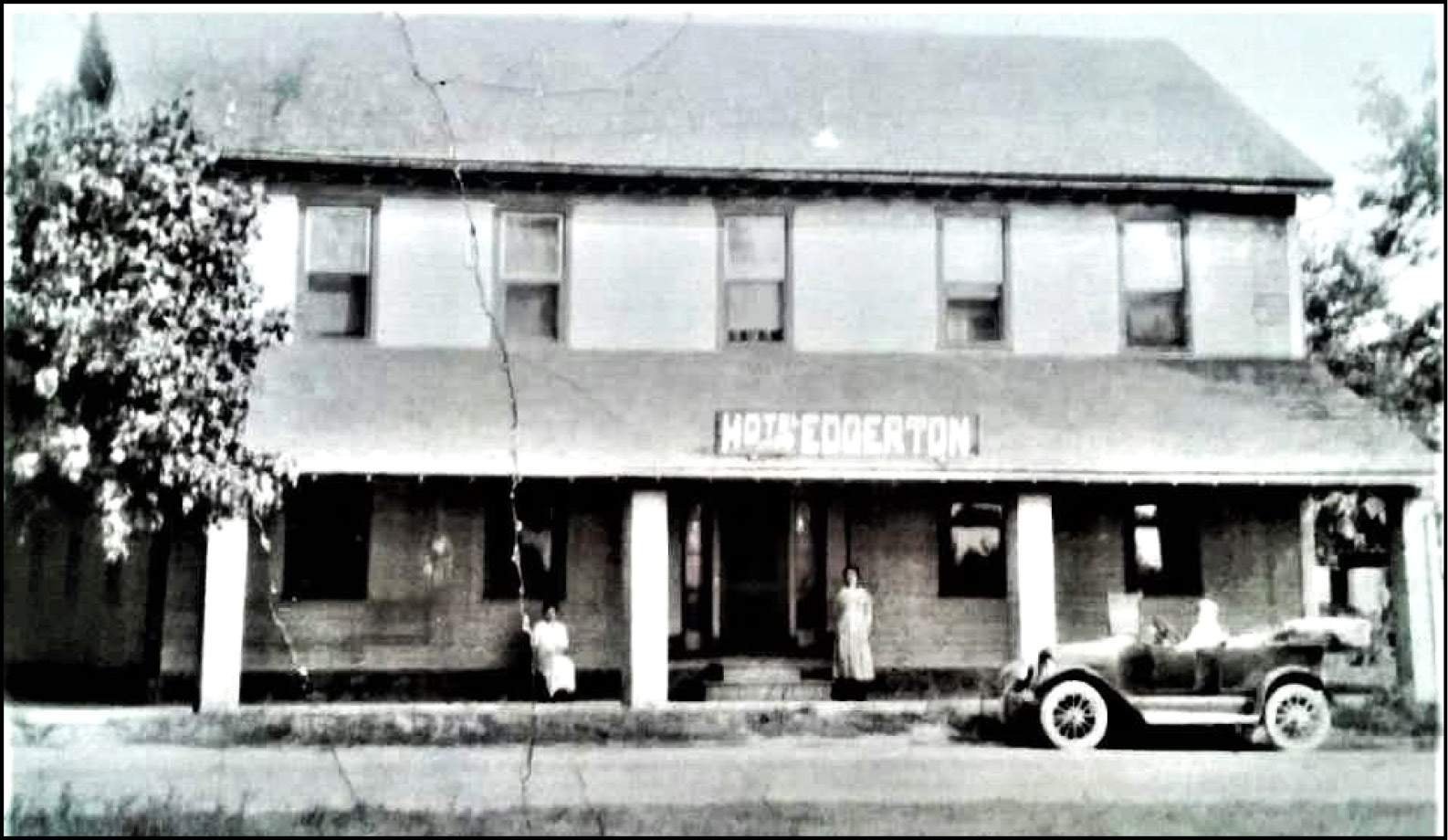
HOTEL EDGERTON … Was located at the corner of Oak Street and Indiana Street, where DKL Service currency resides.
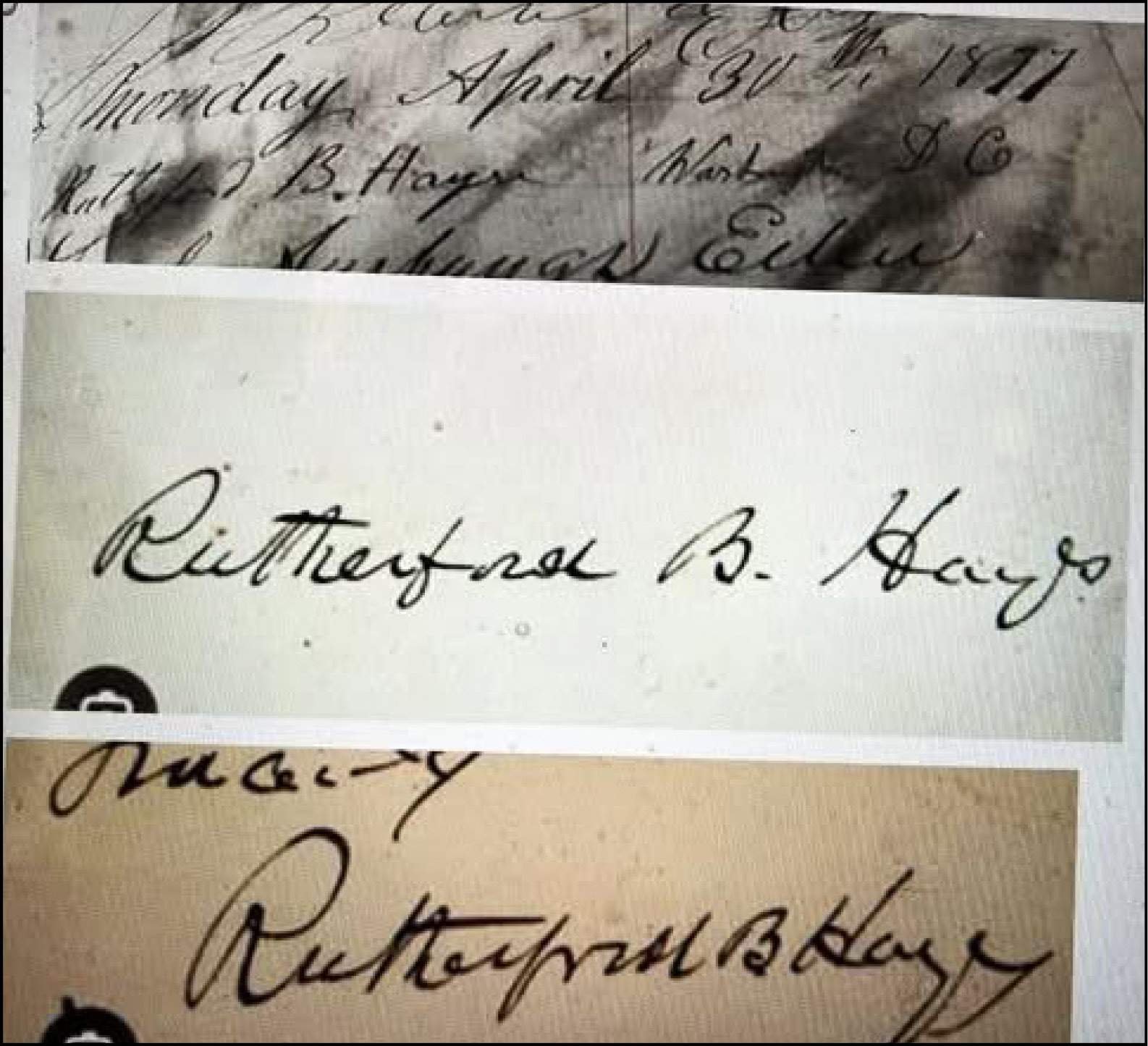 SIGNATURE … A side-by-side comparison of the U.S. President Rutherford B. Hayes’ proposed signature at the Edgerton Hotel and his authentic signature provided by the Fremont Presidential Library.
By: Brenna White
THE VILLAGE REPORTER
publisher@thevillagereporter.com
A question of national history has surfaced in Edgerton following the discovery of a hotel registry in 1877.
The registry, recently donated to the Edgerton Historical Society by Carol Bunting, contained a signature that has raised speculation about whether President Rutherford B. Hayes may have once stayed in the community.
The entry, dated April 30, 1877, appears to bear the name “Rutherford B. Hayes” of Washington, D.C. President Hayes had taken office less than two months earlier, on March 4, 1877.
At the time, presidential travel was far less restricted than today, and rail lines did allow for travel between Washington, D.C., and northwest Ohio.
However, upon further review, the Rutherford B. Hayes Presidential Library in Fremont determined the handwriting did not match authenticated examples of the president’s signature. Records also indicate Hayes was in Washington, D.C. that day, casting doubt on the possibility of his visit.
The registry, nonetheless, provides a fascinating connection to the long history of the Hotel Edgerton. Established in 1857 on the corner of Oak and Indiana Streets, the hotel saw a succession of sixteen proprietors over the decade. Its most notable owner, Horatio T. Carey, purchased the property in 1919 and operated it until 1938.
The hotel became a centerpiece of the community, hosting events such as Edgerton High School alumni banquets and serving as a gathering place for travelers arriving by rail at the nearby New York Central Depot.
Over time, changes in transportation and travel patterns led to a decline in small-town hotels. The Edgerton Hotel was eventually dismantled, its furnishings sold at auctions, and its property later redeveloped.
Yet, its story continues to be told through documents, artifacts, and the memories preserved by families and local historians.
While the mystery of President Hayes’ possible stay in Edgerton may never be fully resolved, the discovery of the registry has drawn new attention to the role the hotel once played in the community.
It remains a reminder of the town’s connection to broader historical events and the enduring importance of preserving local history.