
Close Menu
The Village Reporter
  • Home
  • Subscribe
  • Current Edition
  • Store Locations
  • Photo Albums
  • Rate Card
  • Classifieds
  • Contact Us
Facebook X (Twitter) Instagram
Wednesday, March 11
Facebook X (Twitter) Instagram YouTube TikTok
Login
The Village Reporter
  • Home
  • Subscribe
  • Current Edition
  • Store Locations
  • Photo Albums
  • Rate Card
  • Classifieds
  • Contact Us
The Village Reporter
Home»News»Ohio Turnpike May Soon See Self-Driving Testing
News

Ohio Turnpike May Soon See Self-Driving Testing

By Newspaper StaffAugust 19, 2016Updated:November 30, 2016No Comments4 Mins Read
Share Facebook Twitter Email Copy Link
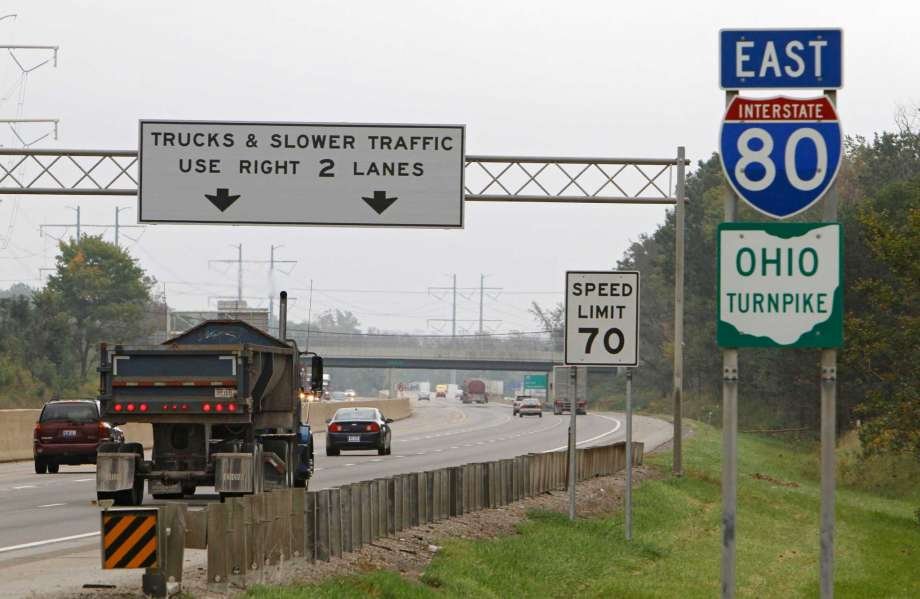
Ohio Turnpike Executive Director Randy Cole tells The Associated Press that testing of self-driving vehicles could begin on the toll road in late 2016 or in 2017. Cole says the route that takes Interstate 80 from Pennsylvania to Indiana is set up well for testing autonomous vehicles because it already has a fiber network along the entire roadway.

TOLEDO, Ohio (AP) — Ohio’s toll road, a heavily traveled connector between the East Coast and Chicago, is moving closer to allowing the testing of self-driving vehicles.

Testing is likely to begin within 12 months, and possibly before the end of the year, the Ohio Turnpike’s executive director told The Associated Press.

Officials overseeing the roadway have spent more than a year looking at the possibilities, said Randy Cole, the turnpike’s director.

Ohio is among several states competing to play a role in the testing and research of autonomous vehicles, which is advancing at light speed.


Ride-hailing service Uber said Thursday that it will start hauling passengers in self-driving cars with human backup drivers on the streets of Pittsburgh within the next several weeks.

Much of the testing, up to now, has been in California along with a handful of Western U.S. states and on closed courses, such as one operated by the University of Michigan in Ann Arbor.

More testing is needed in new places and where there’s snow and ice, Cole said.


“It’s got to start happening on real roads,” he said in an interview this week. “That’s part of getting the consumer confidence.”

The Ohio Turnpike, which takes Interstate 80 across northern Ohio and links Youngstown, Cleveland and Toledo, is set up well for testing autonomous vehicles, he said.

It is relatively straight and flat with three lanes in each direction, wider lane markings and space for maintenance and support crews, Cole said.

And the 241-mile highway is less congested than other interstates in Ohio and already has a fiber network along the entire roadway, he said.


Fiber optic lines aren’t necessary for self-driving vehicles that rely on their own GPS systems. But they could allow vehicles connected to the network to relay information back-and-forth — such as road conditions — or help collect testing data, said Jim Barna, an assistant director with the Ohio Department of Transportation.

“That’s where the fiber optics may come into play,” he said.

The U.S. Transportation Department has said it will propose federal government guidelines for self-driving vehicles later this year.

States also are grappling with how to regulate the technology. Just a handful — including Nevada, California, Michigan and Florida — have approved guidelines for testing.

Because Ohio’s toll road has its own governing authority, it can more easily allow the testing, Cole said.

“We will make sure any vehicle testing is as safe, or safer, than any other vehicle on the road,” he said. “It shouldn’t scare people.”

Cole said he sees more opportunities right now coming with the trucking industry.

One possibility already being tested in Europe is called platooning — a tractor-trailer with a driver that’s linked to a self-driving truck following closely behind.

Lowering freight costs will help the state’s manufacturing industries and could create new jobs, Cole said. “This is part of Ohio’s future,” he said.

Republican Gov. John Kasich has been pushing state agencies to take a leading role in the rapidly growing development of self-driving autos.

The state’s highway department is working on creating another testing area along a divided highway northeast of Columbus.

It’s planning to install a fiber optic cable as soon as next spring on a stretch of U.S. 33, Barna said.

The state’s largest city, Columbus, won a $40 million federal grant this summer to put new transportation technologies, including self-driving cars and connected vehicles, into use.

INFORMATION PROVIDED

Previous ArticleNorth Central Schools Eye On Getting People In New High School
Next Article Chase Brass Holds Reunion For Retired Employees

Related Posts

FULTON COUNTY COMMISSIONERS: Commissioner Jon Rupp To Retire; March Proclaimed Developmental Disabilities Awareness Month

March 11, 2026 News

MONTPELIER BOARD OF EDUCATION: Board Accepts Safety Grant, Approves $959K Special Education Agreement

March 11, 2026 News

BRADY TOWNSHIP TRUSTEES Trustees Eye Road Work, Mud Complaints, New Fire Truck

March 11, 2026 News

WILLIAMS COUNTY COMMISSIONERS: Commissioners Table Roundabout Project For Further Review

March 11, 2026 News

Comments are closed.

Account
  • Login
Sponsored By
Facebook X (Twitter) Instagram
  • Opt-out preferences
  • Privacy Statement (US)
  • Disclaimer
© 2026 The Village Reporter. All Rights Reserved.

Type above and press Enter to search. Press Esc to cancel.

Manage Consent
To provide the best experiences, we use technologies like cookies to store and/or access device information. Consenting to these technologies will allow us to process data such as browsing behavior or unique IDs on this site. Not consenting or withdrawing consent, may adversely affect certain features and functions.
Functional Always active
The technical storage or access is strictly necessary for the legitimate purpose of enabling the use of a specific service explicitly requested by the subscriber or user, or for the sole purpose of carrying out the transmission of a communication over an electronic communications network.
Preferences
The technical storage or access is necessary for the legitimate purpose of storing preferences that are not requested by the subscriber or user.
Statistics
The technical storage or access that is used exclusively for statistical purposes. The technical storage or access that is used exclusively for anonymous statistical purposes. Without a subpoena, voluntary compliance on the part of your Internet Service Provider, or additional records from a third party, information stored or retrieved for this purpose alone cannot usually be used to identify you.
Marketing
The technical storage or access is required to create user profiles to send advertising, or to track the user on a website or across several websites for similar marketing purposes.
  • Manage options
  • Manage services
  • Manage {vendor_count} vendors
  • Read more about these purposes
View preferences
  • {title}
  • {title}
  • {title}

Sign In or Register

Welcome Back!

Login to your account below.

Lost password?