
 (PHOTO PROVIDED / THE VILLAGE REPORTER)
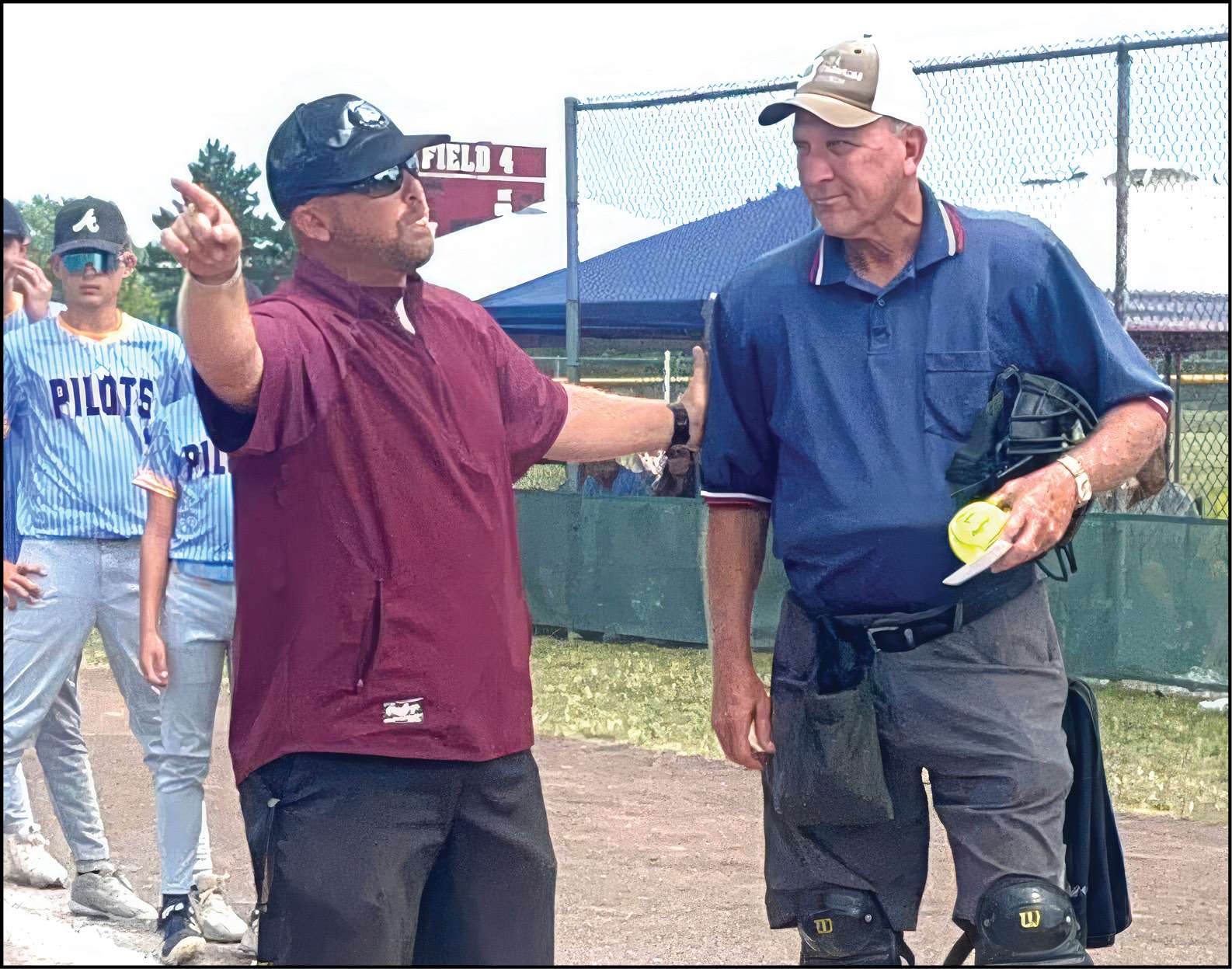
BEHIND THE PLATE … Umpire Rick Stiver is honored during his final game behind the plate.
By: India Kenner
THE VILLAGE REPORTER
india@thevillagereporter.com
For over five decades, umpire Rick Stiver stood behind the plate, not for fame or fortune, but for a deep love of baseball, a commitment to fairness, and a desire to honor his faith and community.
At 72, this seasoned sports official reflects on a career driven by passion, purpose, and the joy of watching young athletes grow before his eyes. His story is one of humility, resilience, and an unwavering dedication to the game.
A calling rooted in faith and example Rick explained, “I wanted to be a good example, not just for the coaches, players, and fans, but to honor God in calling a game as fairly as I possibly could.”
Fifty years ago, when he first donned the umpire’s mask, it wasn’t about the paycheck, there was little to be had in Little League and Pony League games.
Instead, it was about being part of something bigger: fostering sportsmanship, nurturing young talent, and bringing integrity to every call. “I love being around younger kids,” he adds, “seeing the awesome talent transform year to year.”
His passion for baseball shaped his approach to umpiring. “I felt I could be an outstanding umpire, fair and precise,” he explains. He wasn’t afraid to admit mistakes, a rare trait in a role often under scrutiny.
“I changed my call a few times and said I was wrong. It happened, and I owned it.” This humility earned him respect in fields where emotions often ran high.
Among the countless games he officiated, a few stand out as treasures. “Umpiring my grandson Andrew’s last game was special,” he recalls, a smile in his voice.
“And calling games for my other grandson, Luke, in several of his games, those were moments I’ll never forget.”
While he spent most of his career in youth leagues, he also officiated two high school games, which he describes as “pretty memorable” milestones in a long career.
Keeping up with the rules was straightforward for youth baseball, where the core of the game remained consistent. “Baseball is baseball. Few changes over the years.”
However, softball posed a unique challenge. “The rules are different from baseball. That took some getting used to.” His adaptability and willingness to learn kept him sharp, even as the game continued to evolve.
Physical fitness, though, was another story. “I always promised myself I’d exercise before the season started. I never did.”
The first few games left him sore, barely able to climb out of bed. But after a few days, he’d find his groove, the aches giving way to the rhythm of the season. Mentally, he stayed focused by leaning on his faith and commitment to fairness, ensuring every call was made with clarity and confidence.
Remarkably, in 50 years, he never ejected a player, coach, or fan. “I’m proud to say I was never involved in a heated argument over a call,” he says.
When tensions rose, he defused them with calm explanations. “I understand emotions are part of the game. I let fans, coaches, and players express themselves, and they never crossed the line. I was grateful for that.” His approach, rooted in empathy and authority, kept games respectful and focused on the kids.
Even when faced with criticism, he remained unflappable. “I tried to explain questionable calls, and coaches accepted that for the most part,” he says.
His ability to communicate clearly, like informing coaches and fans why a pitch was called a ball, inside, outside, high, or low, set him apart.
“It was an insult to me if someone had to ask the count,” he says, emphasizing his commitment to keeping everyone informed.
His influence extended beyond the field. Asked to train aspiring umpires, he shared practical wisdom on positioning, confidence, and fairness. “I did a couple of sessions, and they were well received,” he says modestly.
His advice was simple but profound: do your best, stay fair, and respect the emotions of the game. “Everyone wants to win. Umpires have to realize emotions will stretch limits when a call is controversial. You do your best, and hopefully, you earn respect.”
What does he hope his legacy will be? “I want umpires to know you do the best you can, and you walk away with your head held high,” he says.
His career wasn’t about accolades but about leaving the game better than he found it, through fairness, humility, and a love for the sport.
“I looked forward to every game. Meeting other umpires, gaining knowledge from them, understanding the game better, that kept me motivated.”
The most rewarding part? “Seeing the kids grow, watching their talent develop, and being part of their journey,” he says.
For him, umpiring was never a life-or-death matter, as it can be at higher levels. In Little League and Pony League, it was about fostering joy and sportsmanship, a mission he carried out with grace.
As he looks back on 50 years behind the plate, this umpire’s story is a testament to the power of passion and purpose.
From calling his grandsons’ games to mentoring new officials, he approached every moment with integrity and heart.
His legacy isn’t just in the calls he made but, in the respect, he earned and the love he shared for a game that brought communities together.
In a world where emotions often flare, he showed that fairness, humility, and a steady hand can keep the game, and its spirit alive.