
By: India Kenner
THE VILLAGE REPORTER
india@thevillagereporter.com
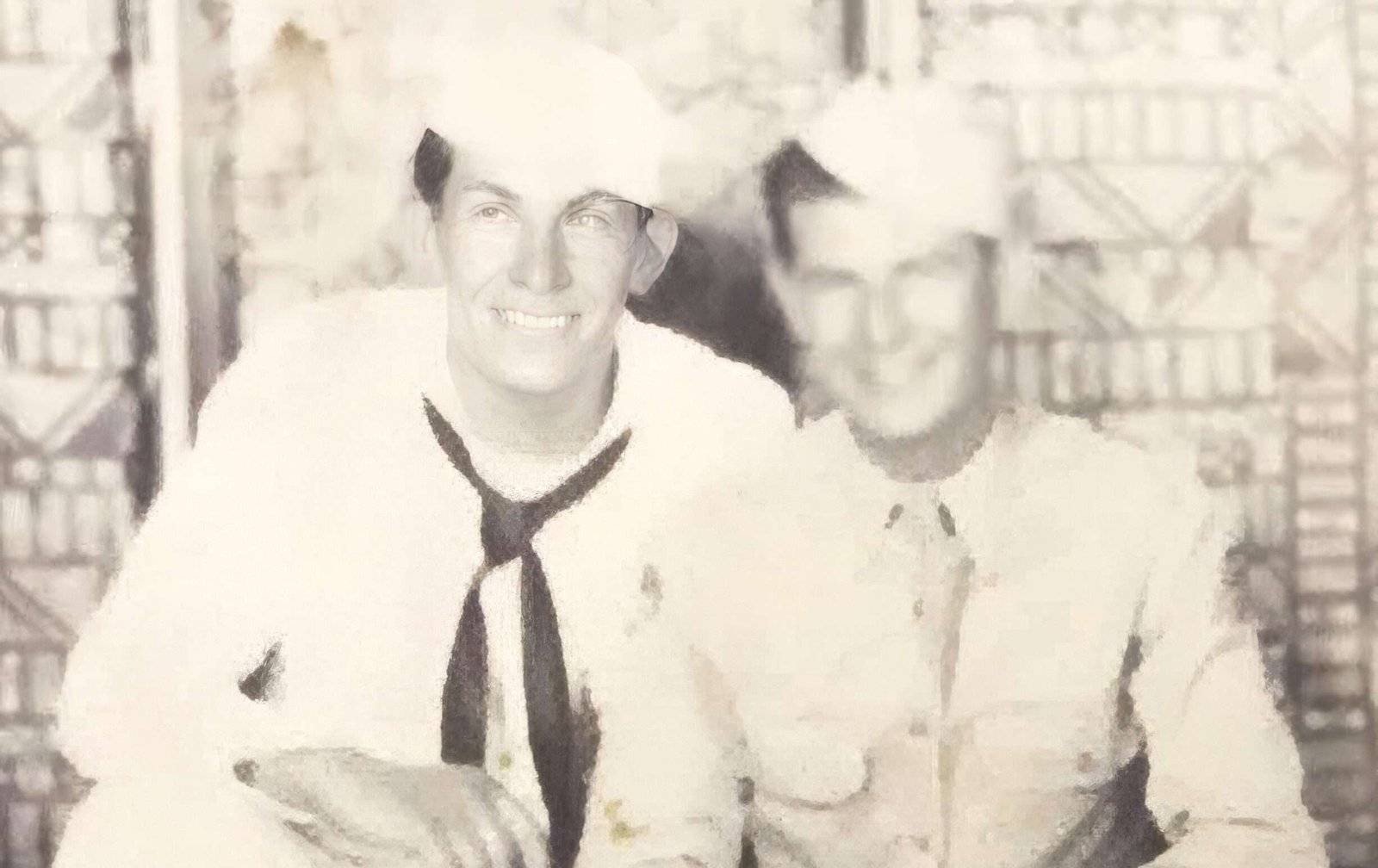
Joe Sito emerges as a true unsung hero, a World War II Navy veteran whose courage under fire and quiet resilience shaped an extraordinary life.

From the decks of the USS Bunker Hill to the helm of Ohio Art’s Etch-A-Sketch empire, Sito’s journey is a testament to bravery, perseverance, and humility.
Fresh out of Sherwood High School in 1944, 18-year-old Joe Sito answered his nation’s call, enlisting in the Navy alongside a friend from Toledo. After rigorous training at the Great Lakes Naval Training Center, he endured a bone-chilling, seven-day journey in a cattle car to San Francisco.
There, he joined the crew of the USS Bunker Hill, a mighty aircraft carrier in the Navy’s legendary Fifth Fleet, Task Force 58, which spearheaded the Pacific Theater’s final push toward Japan.
As a member of the flight deck crew, Sito played a critical role in launching Corsairs, Hellcats, and torpedo bombers into battle. His team worked tirelessly to ensure planes took off smoothly, a high-stakes job that placed him at the heart of the war’s most pivotal campaigns.
On April 7, 1945, the Bunker Hill’s planes sank the colossal Japanese battleship Yamato and its escorts, a triumph Sito didn’t witness from the hangar deck but contributed to through his unwavering dedication.

On May 11, 1945, off Okinawa’s coast, Sito’s courage was tested in one of the war’s most harrowing moments. Two kamikaze planes broke through the clouds, striking Bunker Hill in a devastating 32-second onslaught.
The first plane’s bomb tore through the flight deck, igniting a blaze among fueled Hellcats, while the second crashed into the ship’s tower, its bomb detonating in the pilot’s ready room. The attack claimed 393 lives, left 264 wounded, and marked one of the deadliest kamikaze strikes of the war, surpassed only by the USS Franklin’s losses.
Caught on the hangar deck, Sito and his best friend dove for cover as explosions roared above. Amid choking smoke and chaos, he suffered burns to his hands, face, and back, crawling to the flight deck before collapsing.
“I didn’t wake up for days,” he recalled. Tragically, he never learned his friend’s fate. With hospital ships overwhelmed, Sito remained aboard as the battered Bunker Hill limped to Pearl Harbor and then Bremerton, Washington, for repairs.

After Japan’s surrender, Sito commanded a landing ship-tank (LST), ferrying people between China and Japan with a small crew. Discharged in July 1945 after two years of service, he returned to Ohio and embarked on a 43-year career with Ohio Art, rising to vice president of manufacturing.
There, he oversaw the production of millions of Etch-A-Sketches, the iconic toy that became a cultural phenomenon. Despite his achievements, Sito remained grounded, noting that college was out of reach for a kid from a family of ten.
Sito’s tale is one of quiet heroism—facing kamikaze firestorms, rebuilding a life after war, and leaving a mark on American culture through his work at Ohio Art. His reflections reveal a man who saw history unfold yet stayed focused on the task at hand, whether on a warship or a factory floor.

Sito’s story reminds us that heroes don’t always seek the spotlight—they simply rise to the moment, time and again.