
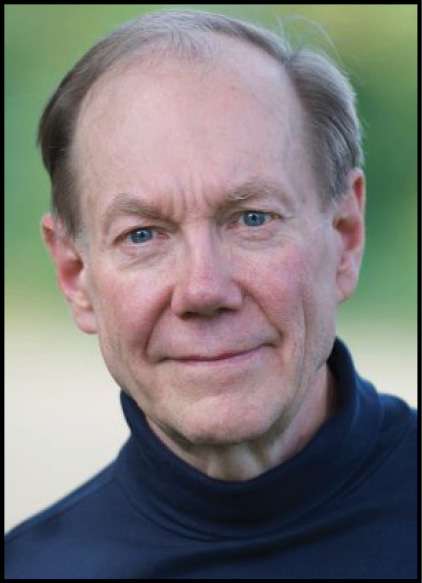
 Dr. Jerry Bergman
Montpelier, Ohio
Arizona State University (ASU) professor Owen Anderson found himself penalized over allegations of “bias” and “slant” toward Christianity in his Religions of the World class.
He taught in ASU’s School of Humanities, Arts, and Cultural Studies. Anderson’s class discussions, for which he got in trouble, were based on the writings of one of the most eminent Western philosophers, theologian Thomas Aquinas.
According to AI, “Thomas Aquinas (1225–1274) was a towering Italian Dominican friar who remains one of the most eminent philosophers and theologians in Western civilization.”

Professor Anderson also had problems because he was an outspoken critic of ASU’s rejection of hiring based on merit. The faculty achievement criteria for all colleges, from community college to graduate school, are teaching, research, and service to the community.
Research includes obtaining grants for research and publishing evidence in reputable journals and books. Service includes such activities as serving on school boards or testifying in court as an expert witness.
Ironically, students gave his Religions of the World sections, which got him in trouble, the very favorable marks of 4.7 and 4.45 out of 5, while his other courses received much lower scores of 4.2 and 3.38.
What course did Anderson get in trouble for? Answer: the course he received the highest scores from students!
School Director Miriam Mara authored Owen Anderson’s negative review based on anonymous student comments.
According to documents that The College Fix examined, one student wrote, “Although I agree with what Owen Anderson teaches, I completely understand if people feel offended after taking his class.”
No doubt college students are accustomed to “bias” and “slant” against Christianity, and some were offended hearing information in favor of Christianity.

The College Fix is an international organization founded in 2011 that monitors bias against professors, especially conservative, religious, or Republican professors.
College Fix is a project of the Student Free Press Association, and its goal is to expose ideological bias, political correctness, and “cancel culture,” especially against Christians and conservatives, in American colleges and universities.
Anderson appealed the decision to the dean of the New College of Interdisciplinary Arts and Sciences, Todd Sandrin. The dean sustained the negative evaluation, noting that Anderson’s course materials and assessments exhibited “unqualified normative language.”
I assume by this he means that Anderson was not a radical or leftist, but a conservative. The dean identified as a concern questions like “What is the highest good?” and exam prompts asking students to discuss how St. Thomas Aquinas would respond to philosophical inquiries discussed in class.
Dean Sandrin additionally took issue with the true or false statement: “Death should not make us think about life.” Dr. Sandrin was Anderson’s last level of appeal at ASU, which concluded that his serious problem was that his classes are “slanted toward Christianity.”
Anderson concluded that he believes “this is overt discrimination against me.” Peter Wood, who leads the conservative organization National Association of Scholars, added, “A professor teaching in a secular university about religion inevitably will irritate some students because students bring with them strong sensitivities on these matters.”


We could add strong feelings as well but that does not mean the topic should never be covered in any class. I have now documented over 200 cases of bias against Christians in cases very similar to the Anderson case. It is a widespread problem that will continue until informed outsiders expose the problem.
Colleges that are the Exception
To be fair, my grandson and granddaughter graduated with honors from Mississippi State University in Starkville, Mississippi. Mississippi State University for Agriculture and Applied Science is classified among “R1: Doctoral Universities – Very High Research Spending and Doctorate Production.”
My grandchildren related to me that they did not experience any overt religious bias from professors. Their degrees were in logistics (a business area) and engineering, an area where less bias against Christianity and creationism typically exists.
They also became very involved in the active Christian groups on campus, which were very supportive of their faith walk. Mississippi is part of the Bible belt, they reminded me, and therefore they are more open about speaking favorably about Christianity.

Possibly more pressure on the colleges by the public, and especially by the churches, would ameliorate this widespread discrimination problem against Christianity. I want to thank Jose Nino for his background research on this article but all of the conclusions are mine.
———————-
Dr. Bergman is a multi-award-winning professor and author. He has 9 degrees and has taught at both the graduate and undergraduate level for over 40 years. His over 2,100 publications are in both scholarly and popular journals. Dr. Bergman’s work has been translated into 15 languages. He has spoken over 2,000 times to college, university and church groups in America, Canada, Europe, the South Sea Islands, and Africa. He lives in Montpelier and is available to present in churches and schools. Jerry can be reached at JerryBergman30@yahoo.com Bergman’s website is: https://crev.info/author/jbergman/