
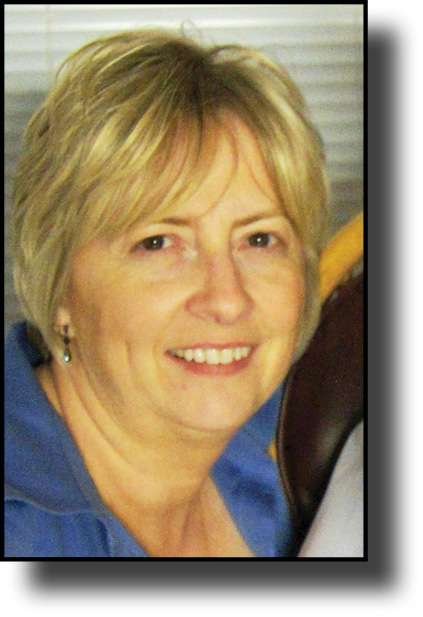
 By: Marlene Oxender
Montpelier, Ohio
Life before the internet – many of us remember it. There were no computers. No online tutorials.
When we wanted to know something, we opened a book. We used the card catalog at the library to help us find the books we needed.
At the beginning of each school year, we were issued a stack of textbooks – one for each subject. We used our books during the school day and took some of them home each night so we could complete our homework – on lined paper.

Bookbags weren’t in common use back then, so we carried our books, binders, and folders home in our arms, stacked one on top of the other.
My mother must have believed her children would someday like to read their homework again, because I’m finding it now as I sort through her estate. She even kept papers that those before her had saved. And now I’m following in her footsteps – saving papers that those before me had saved.
If my mother’s set of 1958 World Book Encyclopedias could speak, they’d tell me how often they’d been used, which pages had been opened and by whose hands. They’d tell me what it’s like to feel as if they’d lost their purpose and are now nothing more than a conversation piece taking up space on a shelf.
And my mother’s vintage typewriter – it wrote many stories. It served her well as she wrote about times from long ago. The typewriter ribbon has dried, but I recently learned replacement ribbons are still available. I’m looking forward to typing on it once again as I show my grandchildren how it works.
My mother’s “cut and paste” was literal. She used a pair of scissors to cut the pages she’d typed, then rearranged the paragraphs and taped them in place. This practice from long ago is where the phrase originated.
Like many women of her generation, my mother owned cookbooks she rarely used. Back then, most cooks simply cooked. Important recipes were written on index cards and stored in a hinged recipe box.

I watch an online cooking show in which the host, Glen, uses recipes from vintage cookbooks that viewers send to him. Glen selects a recipe, and as he cooks, he explains why things were done the way they were back then.
More than once, I’ve heard Glen speak of the difference between cookies and biscuits. In the UK, biscuits are what Americans would think of as cookies or crackers, and the closest thing they have to a biscuit is a scone.
My online search engine quickly caught on to my interests and began sending articles about biscuits. The little engine sent a recipe for Raspberry Ripple Biscuits to my home page. Then one for Tea Biscuits, followed by a recipe for 1856 Tavern Biscuits.
I wanted to know what made a biscuit a tavern biscuit, so I read about taverns, then pubs, then the difference between the two.
This is why we spend more time on the internet than we intend – one bit of information leads to another. We turn the pages of our virtual encyclopedia and learn things we didn’t know were there to learn – like the difference between a tavern and a pub.
My collection of biscuit recipes would not be what it is without a search engine in charge of selecting what may catch my interest. It knows I’ve saved recipes for Chocolate Chip Biscuits and Scottish Shortbread Biscuits. It knows how quickly I clicked on to the recipe for Pickle Biscuits.


After our kittens were born, I learned that cats “make biscuits” as they knead away on their owners’ laps. And woodworkers know how to make a biscuit joint by using small pieces of wood and a biscuit joiner.
My mother never used the internet to look up information about kitties and biscuits and things we’d like to know. She did, however, learn how to type and send an email. Her children were grateful for her daily updates. We loved how she didn’t correct her typing errors as we read what she had to say.
And such is life – a place where we keep our metaphorical typewriter up to date. Where we may start again with a fresh piece of paper and a new ribbon. Where we learn to live with our mistakes as we add to and delete from our story.
My mother’s books and recipe cards are mostly unused now, but what she loved still lingers: the belief that words and knowledge mattered enough to save.
So I keep turning pages – sometimes paper, sometimes digital – carrying forward what she held dear and adding my own small notes in the margins.
———————–
Marlene Oxender is a writer, speaker, and author. She writes about growing up in the small town of Edgerton, her ten siblings, the memorabilia in her parents’ estate, and her late younger brother, Stevie Kimpel, who was born with Down syndrome. Her three published books, Picket Fences, Stevie, and “Grandma, You Already Am Old!” are available on Amazon. Marlene can be reached at mpoxender@gmail.com