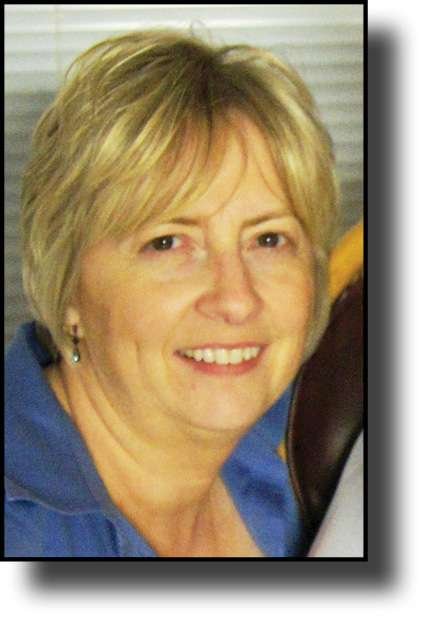
 By: Marlene Oxender
Montpelier, Ohio
My mother used to tell me I was her best little helper. It made me want to help her more. I wonder how many times I heard her say that I was her best little helper. In my mind, it was too bad for the rest of my siblings who weren’t her best little helper.
As an adult, all I can say is, “Well played, Mom. Well played.” It all makes sense now – I was her ninth child. There were three boys ahead of me. Mom needed help with babies ten and eleven.
Mom had learned to tap into a child’s desire to be trusted. She knew how much we already knew, and we’d dry the dishes and stack them as if we were working in our toy kitchen. We’d fold the towels and even help with the laundry.
She knew we’d keep an eye on the other children as she reminded us that there’d be no fighting. My brothers learned how to change tires and fix sinks because they were in charge of holding the flashlight and handing the correct tool to the adult who was getting the work done.
My mother’s words stayed with me all these years, but I wonder how many other words have quietly disappeared. I was recently reminded by a college friend of a high score I had received on a final exam.
There she was, remembering one of my accomplishments, while I needed her story and a few prompts before I remembered it.
The next day I asked myself why our memories are the way they are. Why don’t we train ourselves to dwell on joyful moments? Why does our mind keep old hurts alive and well? Why don’t we dwell on our accomplishments – not in pride, but in joy?
If we were asked to teach a Gratitude 101 class, many of us would decline, thinking we’re not qualified. But saying yes to an offer such as that would make us think. It’d make us study and wake up to the little things we take for granted.
I remember attending a meeting years ago where we answered roll call by naming a sound we love to hear. My answer was the sound of my car doors locking on their own as the car moves from park to drive. It’s my car’s way of telling me it wants me to be safe.

What a clever idea – using any of the five senses as a prompt to help us think of things we’re grateful for. The sound of birds chirping is something I can hear even when my house windows are closed.
I don’t know how I know what a mourning dove sounds like, but I can identify its coo. I must have been taught by an adult, and for that I am grateful.
Many of us are familiar with the story of two healthy houseplants that were used in an informal school experiment to see how plants are affected by words.
It was arranged for one plant to be exposed to a continuous recording of children speaking compliments and supportive words. The second plant was subjected to a recording of hateful comments. At the end of the month, one plant was healthy, and the second plant wilted and failed to thrive.
If plants really do respond this way, think about how words affect humans. Like a cassette recorder, our mind can set a story on replay that stops only when we push the pause button. And if the little voice in our head has been speaking like a bully, we can take away its power.

We can show it the door and welcome a new voice with a better story and a more selective memory.

Every day brings an opportunity to put a new tape into our cassette player. We can become proficient at using the rewind button when we’d like to start over – perhaps with a kinder voice or a more gentle approach.
Our hearts are the keepers of words; we know where they came from and how long they’ve been around. But we rarely think about the words we’ve spoken to another person – words that settled in someone else’s heart. We can only hope the story they play on repeat is the one of how we once made their day.
Our parents began placing gifts under the tree decades ago, and I see the value in the toys they’d chosen for us. There were baby dolls and strollers. Wooden bridges and toy trucks.
But now I know the best gifts a child can receive are words of encouragement. Words that let us know how capable we are. Words that settle in our hearts – never letting us forget who we are.
———————–
Marlene Oxender is a writer, speaker, and author. She writes about growing up in the small town of Edgerton, her ten siblings, the memorabilia in her parents’ estate, and her late younger brother, Stevie Kimpel, who was born with Down syndrome. Her three published books, Picket Fences, Stevie, and “Grandma, You Already Am Old!” are available on Amazon. Marlene can be reached at mpoxender@gmail.com