
By: Brenna White
THE VILLAGE REPORTER
publisher@thevillagereporter.com
A public hearing was held February 12, 2026, at the Williams County Soil and Water Conservation District office to record public comment regarding the Ohio Department of Agriculture’s draft Permit to Operate renewal for Bridgewater Dairy LLC.
The draft permit, issued through the Ohio Department of Agriculture’s Livestock Environmental Permitting Program, would renew Bridgewater Dairy’s ability to operate its existing dairy facility for another five years.
The dairy farm is located at 14894 Road 8.50, Montpelier, in Bridgewater Township within the St. Joseph River Watershed.

The facility currently has a design capacity of 4,250 mature dairy cows housed in five freestall barns.
Manure treatment at the site is handled through an existing anaerobic digester. Treated liquid wastewater is stored in eight earthen ponds with a combined storage capacity of 45.77 million gallons, which provides approximately 262 days of storage.
No new construction or additional animal design capacity is proposed under the draft five-year renewal permit.
As part of the renewal requirements, the facility must maintain a comprehensive manure management plan.
The dairy farm reported a generation of an estimated 3,617 tons of solid manure annually and 63.67 million gallons of treated liquid wastewater, and collected storm water.
The liquid wastewater is land-applied under the control of the facility as an organic alternative to commercial fertilizer. It is used on approximately 5,511 acres of nearby farmland in crop rotation, including crops such as corn grain, corn silage, wheat, soybeans, and alfalfa.
The solid manure and a portion of the treated wastewater are distributed to area farmers to use on their own crop ground.
The renewal permit also requires an Insect and Rodent Control Plan, an Emergency Response Plan, and a Mortality Management Plan for the disposal of dead livestock.
During the hearing, the Department of Agriculture turned the discussion to public comments regarding the permit.
All received comments are taken under consideration by the department when issuing the final release. All public comments must be submitted by February 19, 2026, at 5:00 p.m.
John Keener, President of the Lake Erie Waterkeeper Organization, gave testimony opposing the permit renewal.
In his statement, Keener said the Waterkeeper Organization is seeking stronger oversight of untreated manure runoff from existing, new, permitted, and unpermitted Concentrated Animal Feeding Operations (CAFO) within the Lake Erie watershed.
“We see continuing piles of manure uncovered and water tests showing manure runoff in the Lake Erie streams and rivers. To reduce algae in Lake Erie, these sources must control manure runoff,” stated Keener.
His testimony also questioned the timing and scope of prior operational changes at Bridgewater Dairy LLC.
According to his written statement, in July 2025 the facility submitted a “Major Operational Change” to install a manure pipeline to a satellite lagoon, which was approved.
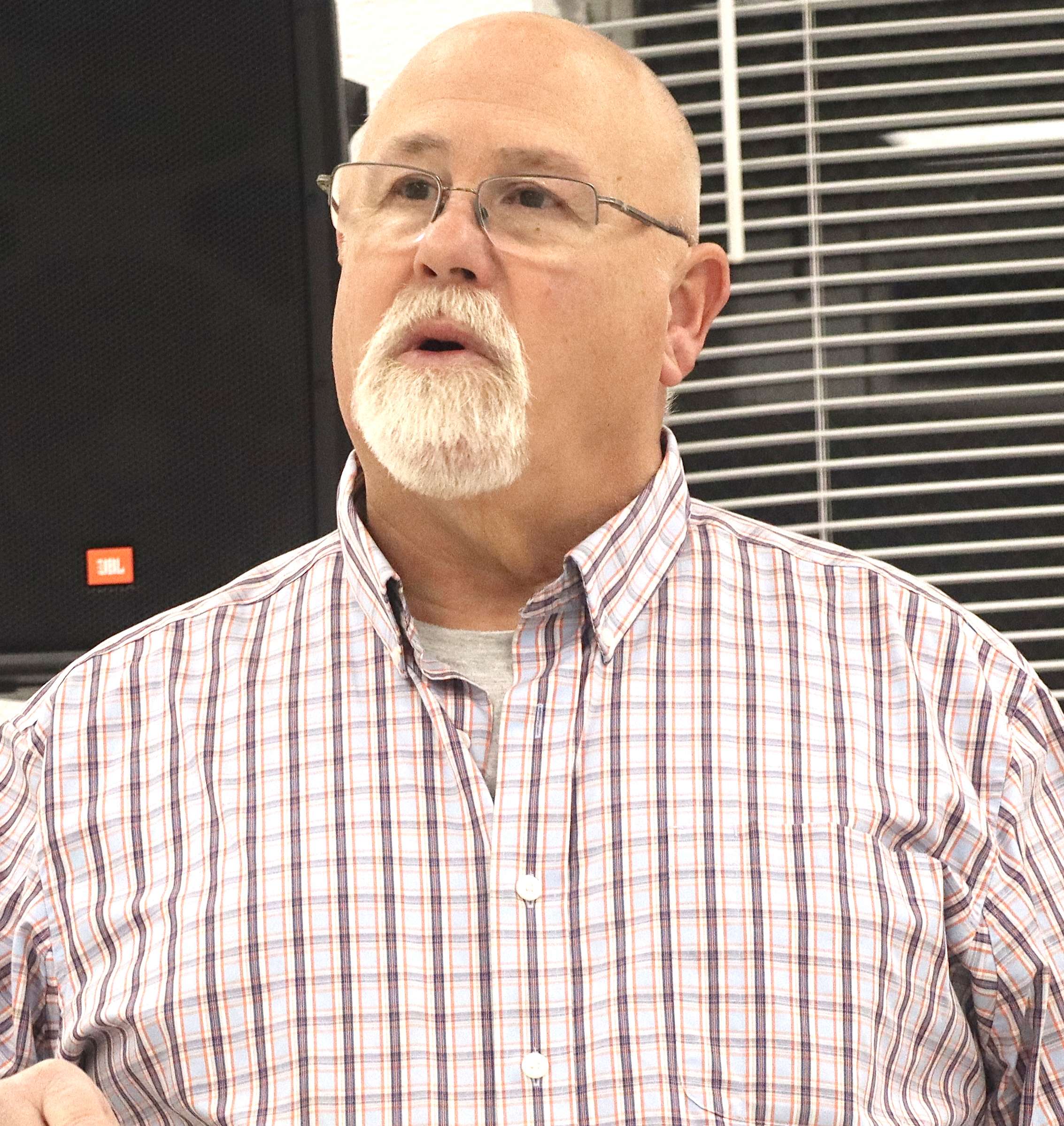
In November 2025, another operational change increasing the number of dairy cows from 3,900 to 4,250 was additionally approved. Keener contends the increased herd size and manure pipeline should have been incorporated into the 2026 permit renewal to allow for public comment on the additional cows, manure production, and the manure pipeline.
Keener further raised questions about historical water withdrawal data, noting reported annual water use figures from 1999 to 2024.
The figures range from a low of 34.81 million gallons per year to a high of 99.71 million gallons per year.
The Lake Erie Waterkeeper Organization asked why water withdrawal reports did not show consistent increases corresponding with herd expansion and requested clarification regarding the number of water wells referenced in the permit.
Former President of the Lake Seneca Property Owners Association (POA) Tony Flynn also provided public comment. “Lake Seneca is a private residential and recreational lake community directly influenced by the St. Joe River.
The river flows through agricultural fields where manure and wastewater from Bridgewater Dairy may be applied before entering downstream waters – which ultimately affect our lake,” he states.
“We recognize the importance of agriculture in Williams County, however, considering the size of this facility and its cumulative expansion, we respectfully request enhanced, enforceable protections within the permit renewal,” Flynn affirmed.
He continued to request routine upstream and downstream water monitoring for algae growth, with results made publicly available.
“The St. Joseph River is a part of the larger Lake Erie watershed,” Flynn continued. “Northwest Ohio has made commitments to reduce phosphorus contributing to harmful algae blooms in Lake Erie. Permit decisions at the local level should align with the broader nutrient reduction goals.”
Lyle Brigle of Edon, Ohio, raised concerns about the overproduction of manure.
“I have to put in a septic tank, towns have to put in an expensive sewage disposal plant, but these people can get away with putting it in big tiff pits and spreading it on our ground,” Brigle said. He questioned why the cow manure disposal process is substantially different from what he sees in municipalities.
Lastly, Niann Lautzenhiser of Hamilton, Indiana, posed questions about the ethics of keeping too many cattle in such a small space.
“I’m also concerned about disease – if you have many concentrated together, and then they get something wrong with them, I would think it would spread a lot,” she explained.
The hearing closed at 7:28 p.m. with no further public comment. The Ohio Department of Agriculture will review the comments submitted, both orally and electronically, before making a final determination on the Permit to Operate renewal for Bridgewater Dairy LLC.