
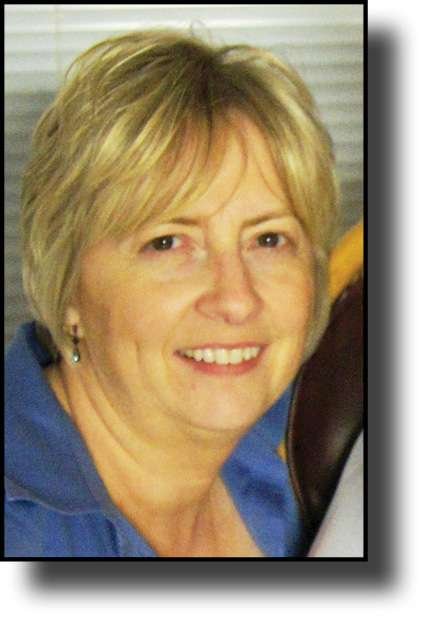
 By: Marlene Oxender
Montpelier, Ohio
As a child, I did a fair amount of daydreaming. The subject of my dreams was always the same.
I wanted to grow up and start living in the wonderful world I knew was out there. The world I could see but couldn’t quite grasp. And as an adult, I’d help the children in my life do the same.
Years later, as I sorted through my parents’ estate, I found papers from my elementary school days. My grade cards reflected the fact that I loved language arts but was not interested in science.

I could do well in math when I wanted to. Phonics was clearly my favorite subject.
I remember sitting at my school desk with third grade classmates as we took turns reading aloud from our textbooks. If the subject wasn’t of interest to me, I had to concentrate on paying attention.
I made it my official duty – just pay attention. I was an experienced daydreamer who knew that allowing myself to zone out meant a very real risk of being called upon to read the next paragraph, and I’d better know which paragraph is next.
But recess was the best. Fresh air and sunshine. Monkey bars and swing sets. A playground that appreciated our energy.
Now that I’m an adult, I’d like to find a copy of my third grade Social Studies book and read it once again. I’d like to know why it couldn’t keep my attention.
Had I been in charge of my own curriculum, my ideal day would have involved a more hands-on approach. I would have loved to have learned about houseplants. About bird feeders and kitty-cats. About flowers and musical instruments.
My homework assignment would have been teaching myself to read music. I would return each morning with a saxophone in hand and prove I’d spent some time practicing.
It may be true that the daydreamer in us is most active during our childhood years. After we become adults, we stop dreaming and start living. We know there’s a happily-ever-after out there somewhere.

I was six years older than my brother Stevie, who had Down syndrome. Occasionally I’d think about what life would be like had Stevie not been born with special needs. I remember thinking his future would not be the same as mine.
He’d never drive a car. He’d never raise a family. He’d be a brother who’d probably spend time with my husband and children, and that’s what happened.
When Stevie was born, his diagnosis was enough to make my parents feel as if their dreams could never come true. They had been given a son who would need extra care all the days of his life.
If only my parents had known the joy Stevie was about to unleash on the world, they could have simply decided to live in the happily-ever-after they didn’t know was before them.

As we watched Stevie grow and experience the wonders of the world, our “Why us?” question took on new meaning. It went from an underlying feeling of sadness to one of privilege. Why was he given to us? Why were we, and those around him, a part of his life?
Anyone who knew Stevie also knew what his hugs felt like. And his pats on the back were the best. He knew how much others liked to see a basketball go through the hoop from the three-point line, so that was his gift back to the world.
In my collection of old papers are a few Bryan Times Cage Classic newspapers that were published the week before the annual All-Star event.

I’ve already looked up why the word “cage” is used in reference to basketball. Possibly a student writer would like to spend some summer hours writing the history of The Cage Classic and let us know all the good things there are to know.

The Bryan Times newspaper sponsored The Cage Classic every year from 1983 through 2019. The event was on hold for three years until Hicksville Schools began hosting it once again in 2023. It’s an evening that leaves spectators in awe of how a basketball can be tossed around a court.
We quickly learn why it’s called the “Slam Dunk” contest as we watch those who’ve taught themselves to slam a ball through a hoop – go ahead and slam a ball through a hoop.
Back in the day when Stevie was an athlete in the Cage Classic, he was given the opportunity to show off his three-point skills. A video of him making three-pointers can be found on the Stevie Kimpel Facebook page as well as on YouTube.
This year’s event will take place on Saturday evening, March 28. All proceeds go to our local Special Olympics programs. If you’d like to make a donation, checks can be made out to Hicksville Schools and sent to their address at 958 E. High St., Hicksville, OH 43526. The evening’s schedule can be found on the Stevie Kimpel Classic Facebook page.

What an honor it is to watch these young athletes who’ve paid attention, worked on their skills, and decided to concentrate on what it takes to be a member of a basketball team.
It’s likely true that the daydreamer lives on in all of us. Our curriculum may change over the years, but from one chapter to the next, our happily-ever-after is unfolding right in front of us – if only we pay attention.
———————–
Marlene Oxender is a writer, speaker, and author. She writes about growing up in the small town of Edgerton, her ten siblings, the memorabilia in her parents’ estate, and her late younger brother, Stevie Kimpel, who was born with Down syndrome. Her three published books, Picket Fences, Stevie, and “Grandma, You Already Am Old!” are available on Amazon. Marlene can be reached at mpoxender@gmail.com
Related Stories
- Column: IS IT REALLY SO? – My Testimony As Seen By Others
- Column: A FRESH PERSPECTIVE – Palm Sunday + 3
- Column: TWO MINUTE DRILL – Abandoned And Alone
- Williams, Fulton County Students Honored At Franklin B. Walter All-Scholastic Celebration
Related Stories
- Steven Kimpel (1969 – 2024)
- Heroes vs. Heroes Special Olympics Basketball
- Column: DOTTING MY TEAS – Feeling Loved
- Column: TWO MINUTE DRILL – Abandoned And Alone