
 By: Bill O’Connell
THE VILLAGE REPORTER
When most of us hear the words hypnotist or hypnosis it conjures up images of an individual, in costume perhaps, swinging a pocket watch or a pendulum in front of a glassy-eyed subject, putting them into a deep sleep then “waking” them with a snap of a finger. Once they have their subject in this mentally unconscious trance the hypnotist will have them perform acts that they would never even think to do if they had control of their own mind. When the act is finished the hypnotist will snap his fingers again, bringing the subject back to consciousness, leaving them with no memory of what just happened.
This is known as “stage hypnotism” and is purely for entertainment. You see it in movies, in sitcoms or on cruise line shows or getaway resort acts. But aside from its entertainment value it only serves to feed the myths associated with hypnotism. People under hypnosis do not fall asleep, they do not lose consciousness, they are in complete control of their behavior and typically remember everything that went on during the session.
Hypnotism or hypnotherapy, as it is referred to in the medical community, is widely used in the treatment of a whole host of physical and psychological ailments and with a great deal of success. These treatments are administered by highly educated and well-trained professionals such as Michael Freeman, an independent clinical counselor with the Community Hospitals and Wellness Centers (CHWC) that have locations in Bryan, Archbold, and Montpelier.
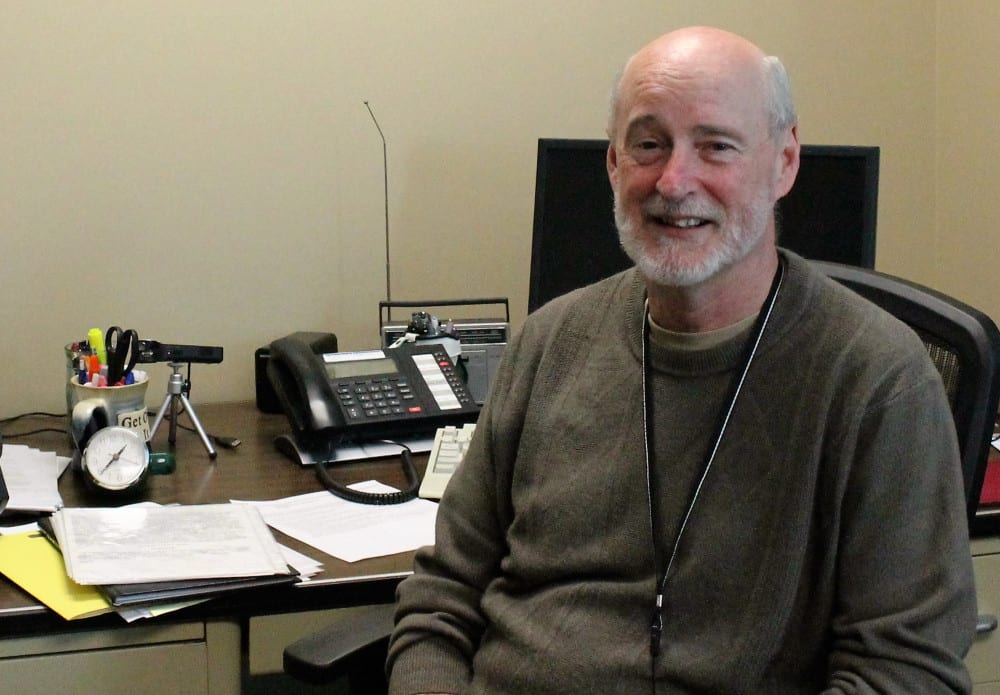
Mr. Freeman, who hold a Masters in Rehabilitation Counseling, has used hypnotherapy as an alternative treatment for drug and alcohol addiction, pain management, tobacco use, weight control, insomnia, anxiety and sports performance to name just a few. His methods and the overall process, however, might not be what you would expect.
“It’s not all just sit down in a chair and I’m going to take this away from you,” Freeman explained. “For smoking I set up and design a program of three sessions. I do a really extensive assessment evaluation, and a background history of medications, head trauma and any kind of problems you might have. I get a real snapshot of the people I’m working with. When I sit down with them I get a great deal of information from them.”
Freeman also pointed out that everyone enters into a hypnotic state or a “trance” on a daily basis and they are always conscious during these periods. “When we daydream, that’s a trance. When we drive 200 miles and can’t remember the last 50, that’s road trance. When we read a good book or watch a movie and get really emotionally involved in those things, that’s a trance state.” He also mentioned one to which almost every parent in America can relate, the trance that kids enter when they are playing video games.
“I tell people this to assure them that they will hear everything I say, they can open their eyes anytime they want and they can go into any deeper level they want,” said Freeman relating a typical conversation with a client prior to a session. “There are a number of levels of depth from a place where a person can undergo surgery to a place where a person can just quit smoking.”
Barb Herr, a volunteer receptionist at the Bryan CHWC hospital, recently had to be treated for a condition that required she be placed in a hyperbaric oxygen chamber.

She was unable to submit to the treatment until she was able to get past one obstacle, claustrophobia, a fear of confined spaces.
Barb sought help from Mr. Freeman who, coincidentally was just a few floors upstairs in the hospital and, after hypnotherapy, was able to get through the chamber treatments with no issues. “I didn’t have any problem at all,” she said. “It was great.”
The American Medical Association(AMA) does not recognize hypnosis as a viable treatment alternative for psychological or medical conditions but things have begun to change.
The American Society of Clinical Hypnosis(ASCH) was founded by Milton H. Erikson, MD in 1957 to promote greater acceptance of hypnosis as a clinical tool with broad applications.
There are strict guidelines for membership and members must be licensed healthcare workers with a master’s degree at a minimum. Today’s membership includes medical doctors, dentists, psychiatrists, nurses, mental health workers and social workers. The ASCH also provides training workshops, certifications and networking opportunities for its members.

The insurance industry has also decided not to cover hypnotherapy treatments at this time but there are some companies that will have coverage built into their employee assistance programs.
Mr. Freeman describes hypnosis as just another “tool in the box” or “one intervention” he uses in his rehabilitation counseling. As part of the hypnosis he will also employ aversion therapy which pairs a stimulus with some form of discomfort, a technique he sometimes uses to treat alcoholism.
“For someone that really wants to stop(drinking), if they tell me what they want then all I’m doing is repeating back to them what they requested. If it requires that alcohol taste like gasoline or kerosene when they drink it, I will say to them, ‘The next time you take a drink of alcohol you may become very sick or nauseous and the taste of it will be like kerosene.’ It’s a post-hypnotic suggestion to that person when they get to that point where they are about to drink alcohol.”
According to Mr. Freeman, everyone can be hypnotized. One major component for the success of hypnotherapy is how much desire a person has to want to change a behavior or how much faith they have in the method itself. Hypnosis is still labeled as an alternative to conventional medical treatments however, judging by the results, it’s an alternative that deserves to be considered.
Bill O’Connell may be reached at
publisher@thevillagereporter.com