
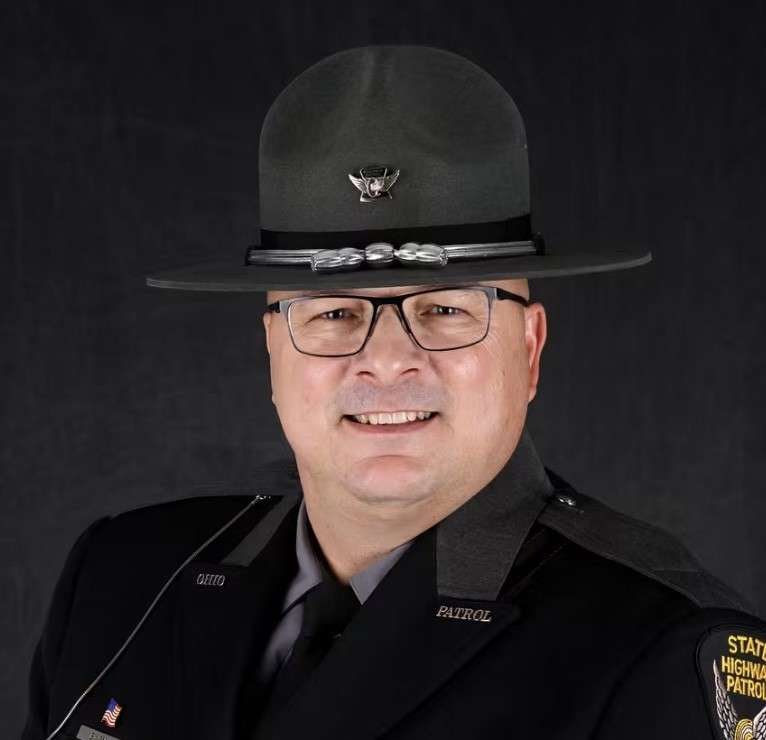
IN UNIFORM … PHOTOS PROVIDED BY RODNEY BINGMAN
By: Rebecca Stalnaker
THE VILLAGE REPORTER
publisher@thevillagereporter.com
FAYETTE — The sounds are different now.

For most of his adult life, Rodney Jerome Bingman knew the sound of a police radio. Dispatch calls. Passing traffic. The rush of vehicles along the highway. Beneath it all was the knowledge that any traffic stop, crash or call for help could change without warning.
“Your next stop might be your last stop,” Bingman said.
For 29 years with the Ohio State Highway Patrol, that uncertainty was simply part of the job. Now, there are different sounds.
Cattle shifting in the barn. The familiar sounds of work around the farm. Family close by.
The lifelong Fayette resident has stepped away from the flashing lights, radio calls and unpredictability of the highway and into a new chapter—one with a different rhythm and more time for the things that have long anchored his life.
“I started when I was 18,” Bingman said. “This is all I know.”
Bingman recently retired from the Ohio State Highway Patrol, ending a career that shaped virtually his entire adult life.
But long before the uniform, patrol car and highway became part of his daily life, he was a young man growing up in Fayette who already knew the direction he wanted to take.
A 1996 graduate of Fayette High School, Bingman said he was an athlete in high school, where sports taught him discipline and the importance of following rules. He also developed a desire to be a positive influence on younger people.
“I always felt like I wanted to be a good role model for younger kids,” he said.
During a trip to Tiffin University for a basketball recruiting visit, Bingman and his mother passed the Toledo Highway Patrol Post near the airport.
“That’s what I want to do,” he remembered thinking. “I want to be a state trooper.”

Less than a year after graduating from high school, Bingman began his career with the Ohio State Highway Patrol through its Cadet Dispatcher Program.
He was 18 years old.
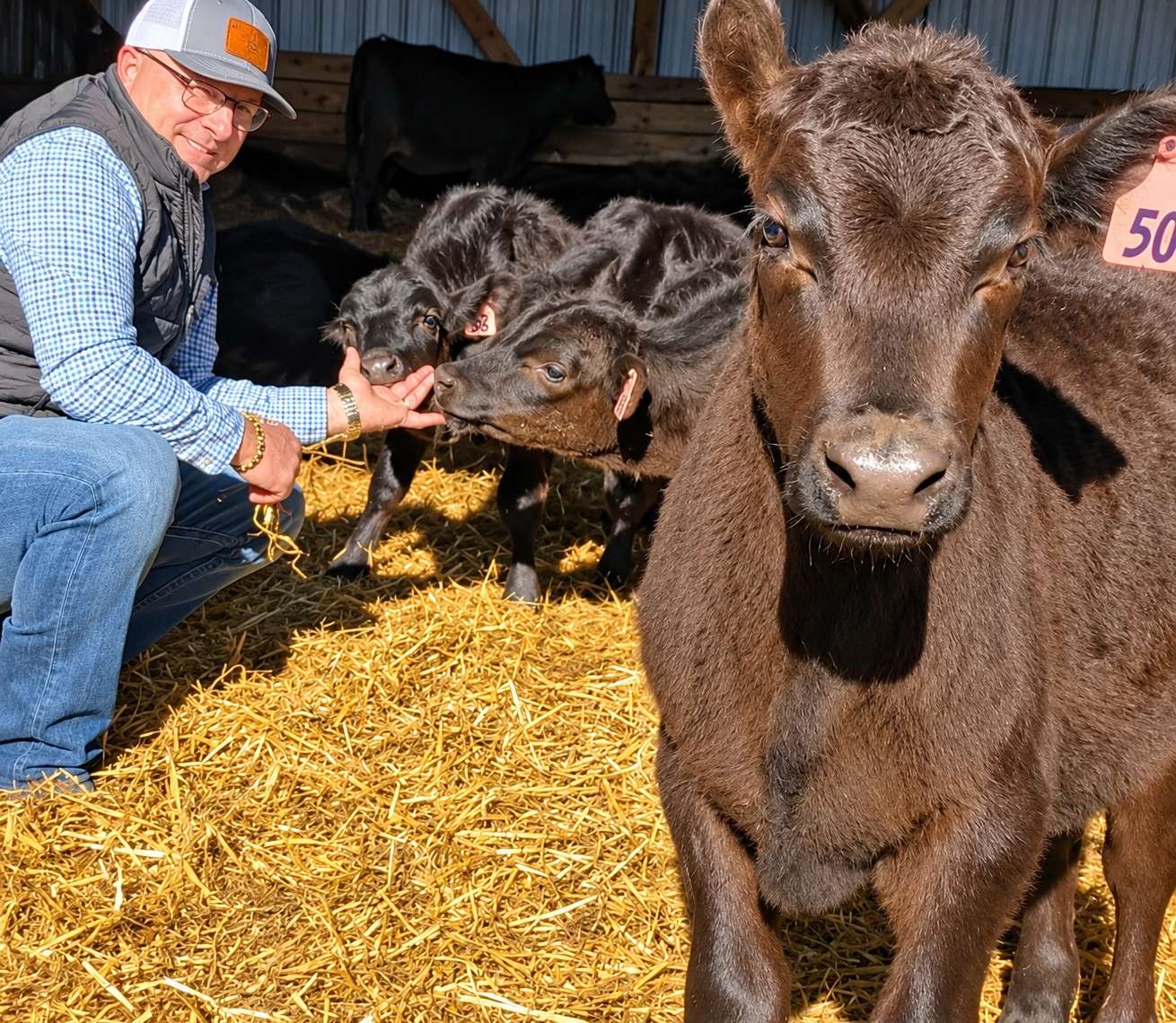

NEW RHYTHM … Retired Ohio State Highway Patrolman Rodney Bingman spends time with cattle at the barn, where he is embracing a new rhythm in retirement after 29 years on the road. PHOTOS BY REBECCA STALNAKER / THE VILLAGE REPORTER
He had no way of knowing then that the decision would shape virtually the rest of his adult life.
LEARNING THE JOB

Bingman’s path began in dispatch.
At 18 years old, he found himself learning responsibilities that initially felt overwhelming. He credits the people around him at the Patrol post with helping him through those early days and giving him the support he needed to continue.
“I’m just so thankful for the people that I had that helped me get through this,” Bingman said. “It was a struggle.”
The academy brought another challenge.

Bingman described the Highway Patrol’s training as highly disciplined and paramilitary in nature. Cadets marched, ran and followed strict expectations. The experience was demanding enough that he remembers sitting at his mother’s kitchen table after his first week wondering whether he wanted to return. But the connections he had made at the Defiance post gave him another reason to keep going. “I didn’t really want to let them down,” he said.
He went back.
And he stayed.
For nearly three decades, the Ohio State Highway Patrol became the career that shaped nearly every aspect of Bingman’s adult life.

THE PERSON BEHIND THE BADGE
Behind the uniform was a philosophy that guided the way Bingman approached both his career and his life.
Throughout his years with the Ohio State Highway Patrol, Bingman said the agency’s core values were drilled into cadets during their time at the academy—so thoroughly that, decades later, he could still quickly recite them from memory.
Adaptability, attention to detail, honesty, officer safety, professionalism, performance-driven, self-discipline, sense of urgency, team-oriented, family and diversity.

Bingman said those values became more than expectations for him while wearing the uniform.
“I live those not only professionally, but in my personal life,” he said.
“If you encompass that into your life, when you’re in uniform and out, you’ll do fine in life.” He said cadets repeated the values countless times during the academy.
“Yeah, we said that like a thousand times while we were in the academy,” Bingman said. “So it’s just stuck there.”

Those principles also shaped the way he treated people.

Throughout his career, Bingman often asked himself one question: If his own wife and daughter were stranded hundreds of miles from home and needed help, how would he want them to be treated? “That’s the way that I’ve always approached the job,” Bingman said.
That philosophy mattered during routine moments of the job—but it also carried into the extraordinary ones.
One of the most meaningful cases of Bingman’s career involved the recovery of a young girl whose father was attempting to take her out of the country.

Authorities tracked the vehicle across the Ohio Turnpike before eventually locating the father and taking him into custody.
Bingman took the girl to the hospital for a checkup before she was reunited with her mother and family. “It was just one of those moments that just touched you forever,” he said.
There were also moments that revealed the danger that could exist behind even the most ordinary-looking traffic stop.
“Your next stop might be your last stop,” Bingman said.

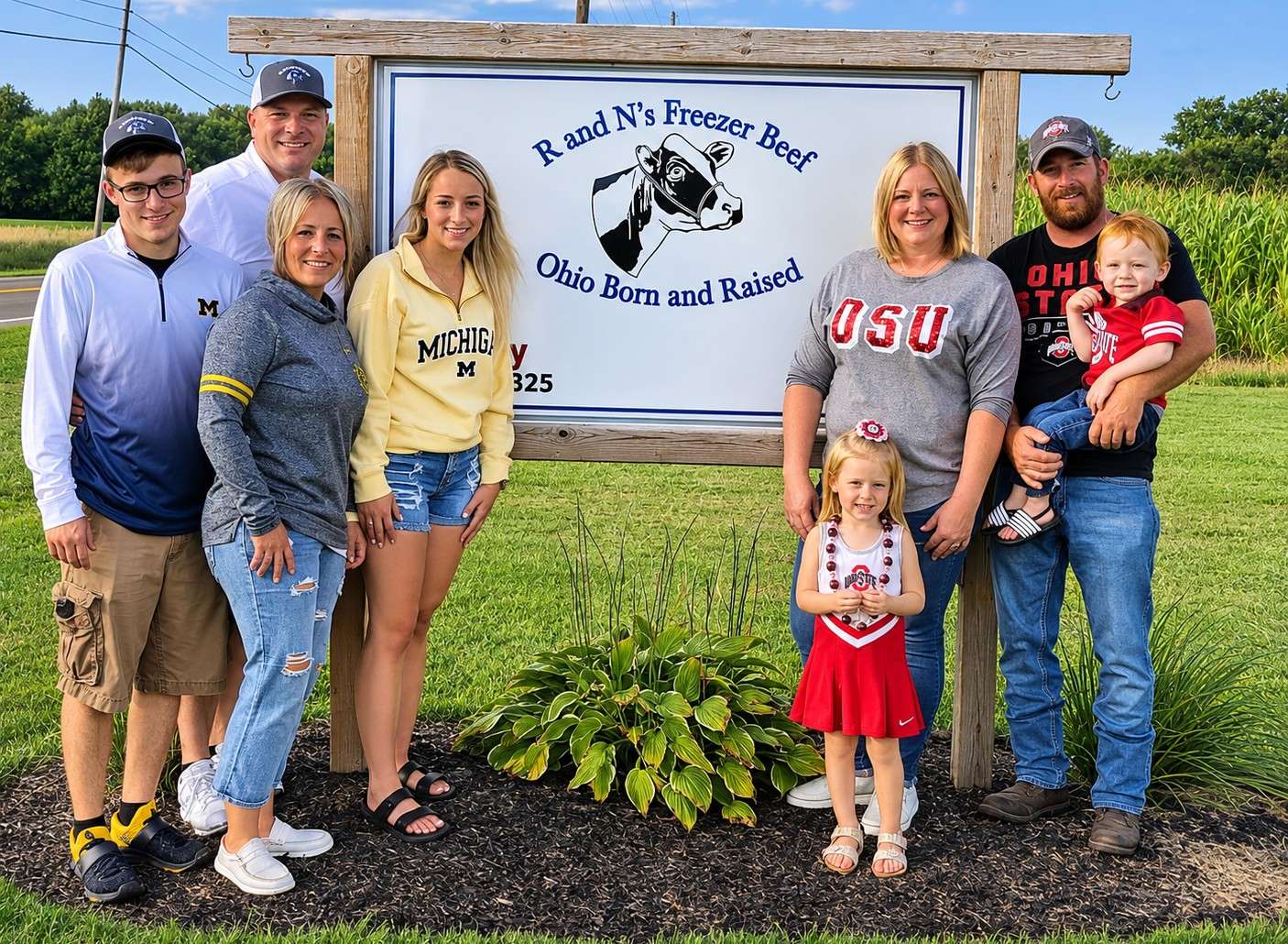
R&N FREEZER BEEF … The R&N Freezer Beef sign picture also features partner Nate Siegel, wife Elise and children.

The most serious calls were often what he described as “low-frequency, high-risk.” They did not happen every day, but troopers could never allow themselves to become complacent.
“You always had to stay on the razor’s edge,” he said. “You didn’t want anything to become routine or normal because it could go sideways.”
THE DAY HE THOUGHT HE MIGHT DIE
The most frightening day of Bingman’s career came June 30, 2022.

During a pursuit involving an erratic driver, Bingman moved into position to deploy tire deflation devices. The situation changed quickly, and he suddenly found himself in the path of the vehicle.
“I thought I was dead,” he said.
The driver narrowly missed him before the pursuit eventually came to an end.
But the emotional impact did not end when the pursuit was over.

A witness who saw the vehicle narrowly miss Bingman came to him crying and gave him a hug. Later, back at the Patrol post, Bingman finally allowed himself to process what had happened.
The experience also brought home the toll that a career in law enforcement can take on the people waiting at home.
“They go through a lot,” Bingman said of the families of first responders.
His own family understood that reality.

Bingman and his wife, Robyn, were high school sweethearts who began dating when he was 16. Both are lifelong Fayette residents, and the community has remained at the center of their lives throughout their marriage.
While Rodney spent nearly three decades with the Ohio State Highway Patrol, Robyn operated a day care from their home.
Together, they raised two children, Noah and Gracee. Bingman said the family connections surrounding them mean retirement is unlikely to bring much boredom.
“I don’t know that I’m going to have that problem,” Bingman said when asked about boredom in retirement. After years of living with the uncertainty that came with his work on the road, retirement has brought Rodney and Robyn a different kind of routine.

A CAREER—AND A WORLD—THAT CHANGED
Bingman watched law enforcement change dramatically over nearly three decades.
When he began, reports and citations were handwritten. By the time he retired, technology had transformed much of the job, from electronic reporting to increasingly sophisticated camera systems. Bingman welcomed the increased use of cameras, believing they provide transparency while also documenting what actually happened during an encounter.
The nature of impaired driving changed as well. When Bingman graduated from the academy in 1999, alcohol was the primary substance involved in most impaired-driving cases, he said. Over time, troopers began encountering an increasingly complicated mix of drugs and other substances.

Another danger became especially frustrating to him: distracted driving.
During one of his final speaking engagements at Swanton High School, Bingman spoke about the danger of looking at a cell phone while driving.
“You’re looking at your cell phone, you’re harming everybody,” he said, emphasizing that distracted driving puts not only the driver at risk, but everyone else sharing the road.
TRADING THE HIGHWAY FOR THE FARM

Years before retirement became a reality, Bingman had already begun building a life outside the Patrol. In 2014, he partnered with Nathan “Nate” Siegel to begin raising cattle. Their cattle operation, R&N Freezer Beef, began with young calves.
For Bingman, working with the cattle became a welcome contrast to the stress and unpredictability of law enforcement.

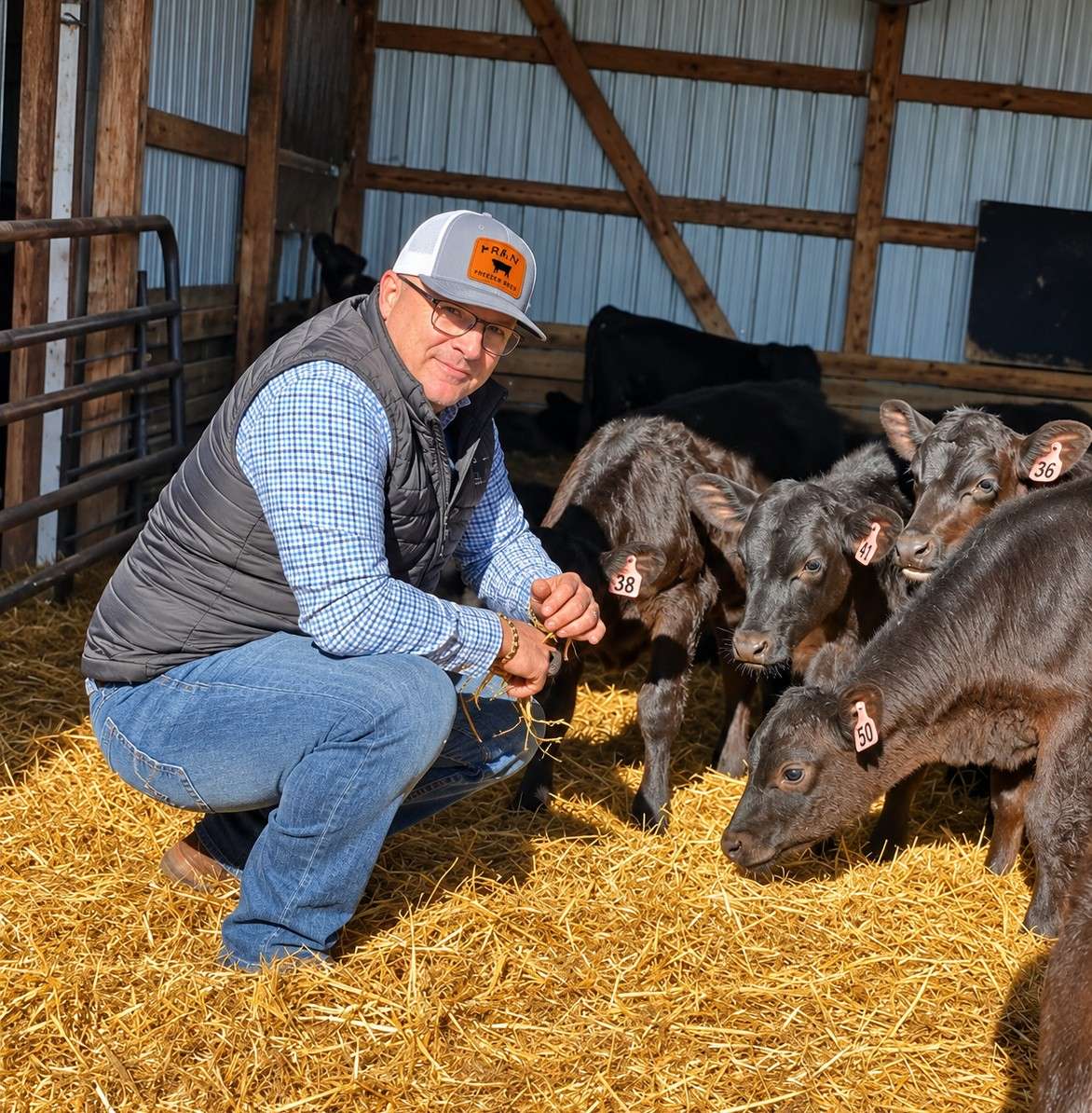

AMONG THE CALVES …
“Working with the cattle, you don’t get that pushback, you don’t get that anxiety, you don’t get all the stuff that you get from being a state trooper,” Bingman said.
The partners bring different strengths to the operation, with Bingman handling much of the communication and organization while Siegel contributes extensive farming experience.

Bingman also recognizes the important role played by both families, including Robyn and Nate’s wife, Elise Siegel.
Now retired from the Highway Patrol, Bingman is settling into a different rhythm beyond the badge, with the cattle operation forming one part of that new chapter.
KNOWING WHEN IT WAS TIME
Bingman initially hoped to reach the 30-year mark with the Ohio State Highway Patrol.

He became eligible to retire before reaching that milestone but continued working as he considered when it was time to leave.
As retirement approached, Bingman said the demands of the career had become increasingly difficult. “Thirty years is a long time, and it was time for me to go,” he said. “The stress and anxiety was just building and just becoming too much.”
Bingman said he came to believe that God was telling him it was time to leave.
The physical demands of the job had also left their mark.

Bingman said years of wearing the weight of a duty belt contributed to physical problems, including a spinal fusion when he was still relatively young.
“It definitely takes a toll,” he said.
His retirement, however, is not simply about leaving something behind.
It is about deciding what matters in the next chapter.

“I want to get healthy spiritually, mentally and physically—in that order,” Bingman said.
After years of working a schedule that sometimes kept him away from church, reconnecting with his faith has become an important priority.
“This job takes such a toll on you in all three phases,” he said.
Faith and service have also remained important parts of Bingman’s life beyond the Patrol.

Bingman and Robyn became deeply involved in the Fayette United Methodist Church and helped establish the Fayette United Methodist Youth Group, known as FUMY. Through the group, they helped provide young people with opportunities for service, including mission trips and efforts to help feed homeless individuals in Toledo.
“We did absolutely everything we could to show these kids what public service and being a good member of the community looked like,” Bingman said.
HOME
For nearly three decades, Rodney Bingman listened for the sound of a police radio and prepared for whatever might be waiting around the next curve.

He worked crashes and traffic stops. He responded when people were having some of the worst days of their lives. He faced situations where an ordinary shift could change in an instant.
Now, the sounds are different.
There are cattle shifting in the barn, work waiting around the farm and family close by.
There is more time to spend with Robyn, Noah and Gracee, and more opportunity to devote himself to the faith and community that have long been important to him.

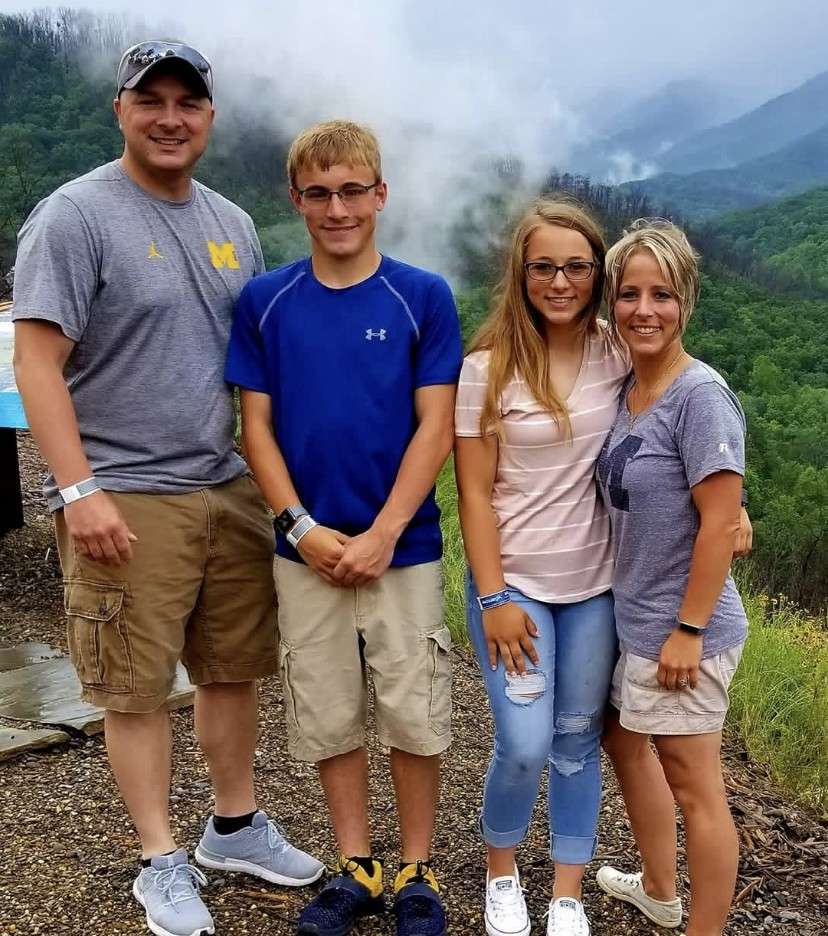
FAMILY TIME … Pictured are Rodney and Robyn Bingman children Noah and Gracee.

Retirement does not mean Bingman has stopped moving forward.
It simply means the road ahead looks different.
After a lifetime spent responding to wherever the road called him next, Bingman is entering a chapter with a different rhythm—one where, for the first time in nearly three decades, the road no longer dictates what comes next.
