
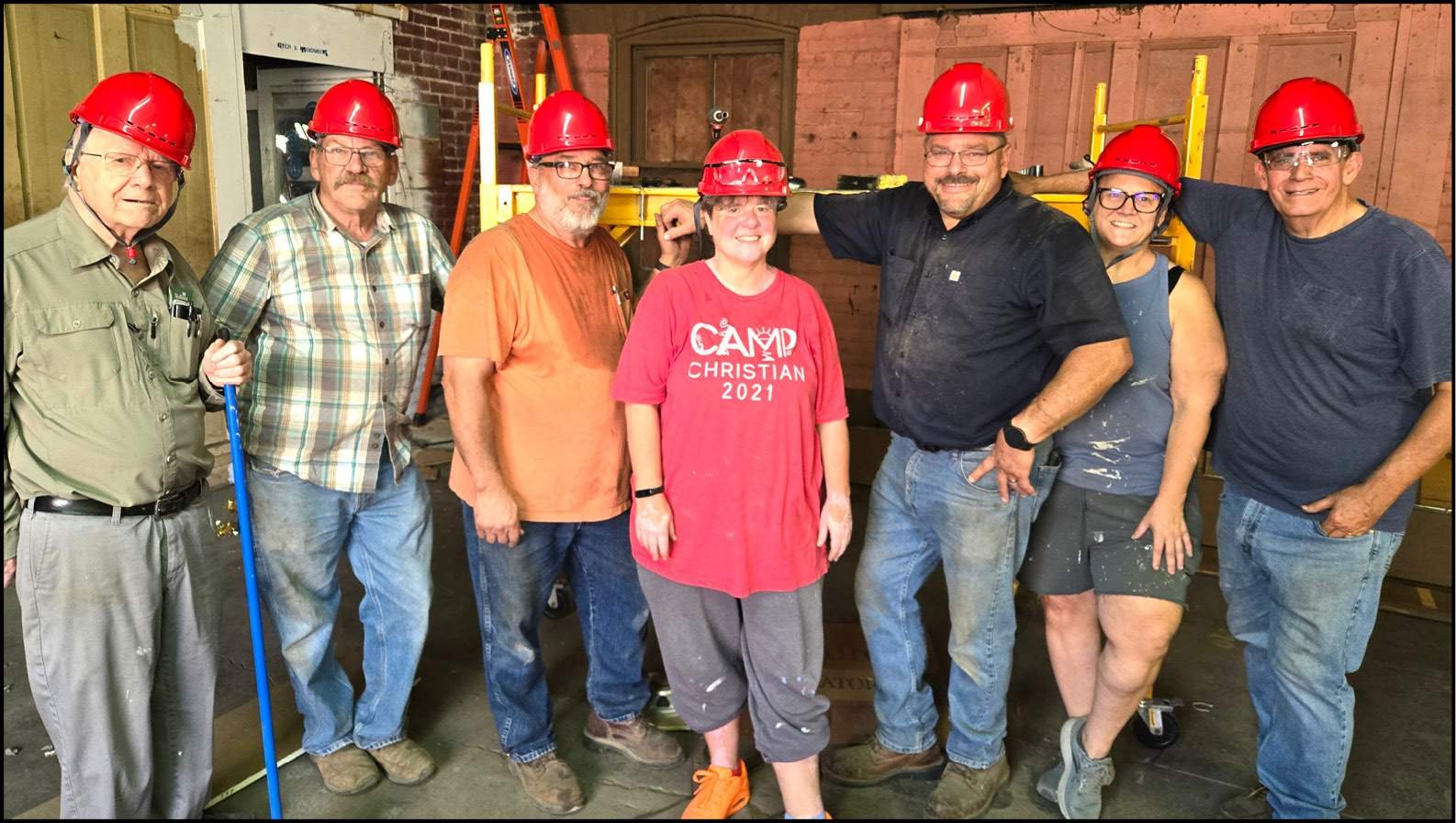
VOLUNTEERS … This photo was taken of some of the volunteers who were helping to begin the restoration process for the Dyer McDermott building on Beach Street. Pictured is Dr. Ken Ladd, Craig Grisier, Doug Myers, Heather Schimmel, Brad Myers, Karin Ladd, and Jim Kerr.
By: Jacob Kessler
THE VILLAGE REPORTER
jacob@thevillagereporter.com
Work has officially begun for the rehabilitation work on the former Dyer McDermott building, located at 129 Beech Street in Wauseon.

This historic structure, which traces its roots back to 1901, is being transformed into a new museum dedicated to transportation and the area’s interurban rail history.
The project with a volunteer-driven effort to remove shelving and other materials left behind from the building’s most recent use. According to organizers, the goal of the cleanup is to prepare the space for extensive upgrades and eventual public use.
The structure originally served as a way station for the Toledo and Indiana Electric Railroad, a key part of the interurban transportation network that once connected much of Northwest Ohio.
The system operated until around 1939, when it went out of business. Following the end of the interurban era, the building was occupied by Toledo Edison and later became home to the Dyer McDermott company, a wholesale electrical parts supplier.
Today, the building is owned by the Wauseon Merchants Association and is slated to house exhibits showcasing regional transportation history.
Among the planned displays will be artifacts, including interurban railway materials, a Model A Ford, and a 100-year-old bicycle. Dr. Ladd is spearheading the restoration efforts. His daughter, Karin, is working on securing a National Historic Landmark designation for the site.
While demolition and cleanup have already made significant progress, much work remains. Organizers estimate they will need between $500,000 and $1 million in funding to complete the project, which will include installing a new HVAC system, handicap-accessible restrooms, and other necessary improvements to bring the building up to modern standards.
Fundraising efforts will soon begin to support the next phase of the project. The ultimate vision is to create a public museum that preserves and shares the story of interurban rail transportation in Fulton County and its lasting impact on the region’s development.