
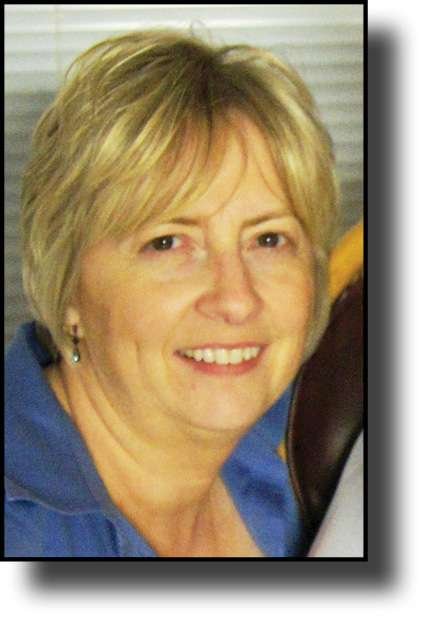
 By: Marlene Oxender
Montpelier, Ohio
If there’s one thing I wish I had written – something that takes years to write – it would be a diary.
I’d keep the kind of diary that keeps track of forgettable moments – what we did and where we went. Just the facts.
Those who keep the other kind of diary – full of thoughts and feelings – are sharing words meant for their eyes only. That kind of diary must be placed under lock and key and hidden in a safe place. The owner of the diary knows where the secret hiding spot is, and so does the anonymous reader.

Years go by, and if the little book is still around when their estate is sorted, someone is going to find the diary and take it home to read. That is when a diary becomes a story.
My mother began writing in diaries at the age of fourteen and continued throughout her teenage years and her engagement to my dad. She wrote about her friends and what they did.
The ball games and movies. The dances. She listened to the “Hit Parade” and noted which song was number one for the week. I should count how many times she’d written the word “fun.”
She wrote about a guy named Chuck, but I didn’t know who Chuck was. The two were dating in 1945, but she felt they’d probably break up by the end of the year. He gave her pearls for Christmas, but after the holidays his name disappeared from her diary.
I realized I was reading a part of my mother’s life I had never known. I found myself thinking that Mom and I should’ve spent some time together reading her diaries so she could tell me the real story of her life.
Knowing that her friends would have some answers, I began visiting them. They knew who Chuck was and could identify him in the photos. They also remembered when Mom was dating Jack Yoder, a man whose name appeared in her diary when he was on leave from the Army.
In May of 1944, Mom wrote that Jack had given her a bracelet as a gift. I wonder if I’ve ever seen that bracelet.

I knew my mother had dated Jack, and they’d gone to his family’s restaurant on her commencement day for a meal. Her diary confirmed what she’d told me. On May 18, she recorded: “Went out to Yoder’s for a chicken supper.”
She had also told me that the image of his parents arriving at her work at The Edgerton Earth newspaper office, in February of 1945, was something she’d never forget. His parents were there to tell her they’d received a telegram. Their son had been killed in Europe.
She left work on her bicycle, stopping at the church to pray on her way home. I wonder how long she cried.
Her experience made me think of the many women from her generation who’d received the same news. Who went through the same heartache and wrote words they never thought they’d write. Many of those diaries are still in existence, here to tell us just a small part of a life story.
In July of 1946, my father’s name appeared in Mom’s diary for the first time. She journaled that Vern Kimpel had stopped by her work that day, and they talked for a “long time.”
On August 16 she wrote: “Mom and Dad went up to Aunt Goldies. I told Vern Kimpel I didn’t have any brakes on bike and he stopped in front of me just to see. He’s nice.”

In September, they spent a Friday evening together at the Williams County Fair on a double date with Mom’s sister Verda and her boyfriend Alfred Curry. Mom spelled Dad’s last name wrong when she wrote: “Al invited Vernon Kimple to go with us. Had a good time.”
Dad’s birthday was the next day, and she wrote: “Vern called me up this afternoon and told me he got his car and wanted us to celebrate his birthday. Went to Bryan to a show. Gave him a plaid necktie.”

They went on their third date on Sunday – taking Dad’s new car to Fort Wayne to see the movie To Each His Own at the Paramount. On the way home, they stopped for a frozen malt at Gardner’s. In the right margin of the diary, she noted the words “wonderful evening.”
Mom continued to keep a diary as they dated and throughout their engagement, but stopped journaling after she was married.

The two of them started a new diary together in 1954, and Dad’s handwriting is present for the first eight days. Then it’s Mom’s handwriting. They were busy people, and the journaling slowed down as the months ticked by.
After Dad passed away in 2008, I took Mom to the mall to shop for clothes for the funeral. We needed a necktie to deliver to the funeral home, and as we stood in the men’s department, it occurred to her: The first thing she’d ever bought for Vern was a necktie for his twenty-seventh birthday. More than six decades later, I watched her buy the last thing she would purchase for him – a necktie.
Years after Mom passed away, the story came to life again as I read that she had given him a necktie on his birthday in 1946. Her diary entry gave me one last detail: It was plaid.
Such a small thing, yet her words helped me see the realness in the story of their life together. Their moments were just ordinary, forgettable moments, yet she preserved them in her own handwriting in the pages of those old diaries.
———————–
Marlene Oxender is a writer, speaker, and author. She writes about growing up in the small town of Edgerton, her ten siblings, the memorabilia in her parents’ estate, and her late younger brother, Stevie Kimpel, who was born with Down syndrome. Her three published books, Picket Fences, Stevie, and “Grandma, You Already Am Old!” are available on Amazon. Marlene can be reached at mpoxender@gmail.com
