 PHOTO BY RENEA KESSLER / THE VILLAGE REPORTER
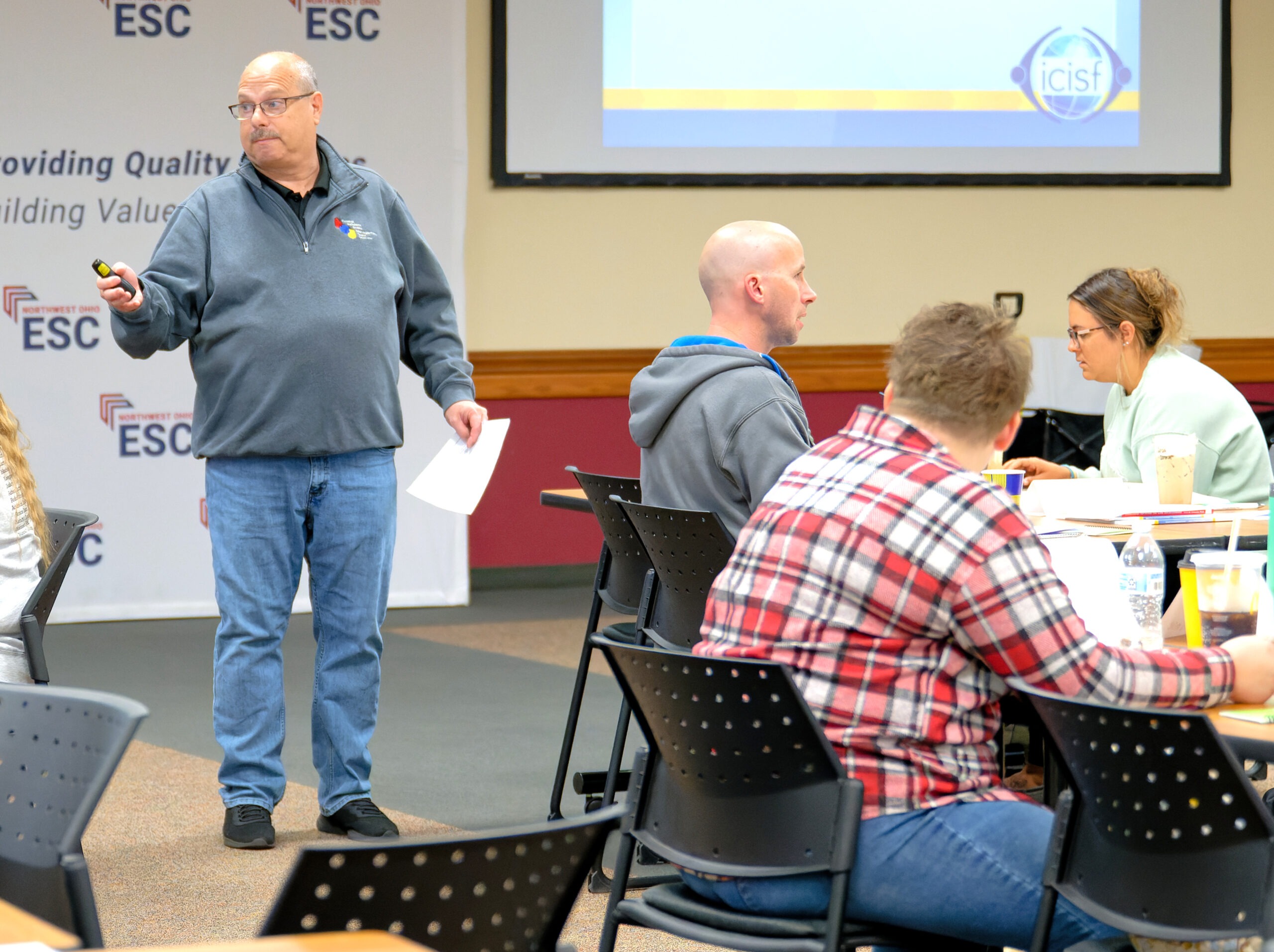
TRAINING… Rick Skilliter teaching at the grant-funded CISM training, held April 21 through April 23.
By: Renea Kessler
THE VILLAGE REPORTER
renea@thevillagereporter.com
A growing effort to strengthen crisis response across Northwest Ohio is taking shape through the expansion and training of the 4 County Critical Incident Stress Management team, a group dedicated to helping individuals and communities recover after traumatic events.
With new leadership, increased training opportunities, and a renewed focus on recruitment, the program is working to ensure that no one faces the aftermath of a crisis alone.

Critical Incident Stress Management, often referred to as CISM, is a structured, peer-driven approach designed to provide immediate emotional support following traumatic or high-stress incidents.
These can include line-of-duty deaths, serious accidents, natural disasters, or community crises. The goal is not therapy, but rather early intervention, helping individuals process what they have experienced, understand normal stress reactions, and begin the path toward recovery.
The importance of that early response cannot be overstated. Individuals exposed to traumatic incidents often experience a range of emotional and physical reactions, sometimes immediately, but often days or even weeks later.
CISM teams are trained to step in during that critical window, offering emotional first aid, stabilizing individuals in crisis, and connecting those in need with professional mental health services when necessary.
Serving Fulton, Williams, Defiance, and Henry counties, the 4 County CISM Team is positioned as a regional resource that can be dispatched through the OhioGuidestone Crisis Hotline.
In large-scale incidents, the team is typically activated shortly after emergency management agencies, underscoring its role as a vital second wave of response focused on mental and emotional recovery rather than physical rescue.
The team supports a wide range of individuals, including law enforcement, fire and EMS personnel, dispatchers, school staff, healthcare workers, and community members impacted by critical incidents. Whether through one-on-one peer support or structured group discussions, the objective remains the same: to help people return to healthy functioning and reduce the long-term impact of trauma.
In November 2025, Chelsea Taft and Joseph Bandeen of the Delta Police Department took over leadership of the program.
Since then, they have been working to rebuild and restructure the team, with a strong emphasis on recruiting volunteers from across the region.

Their goal is to create a robust network of trained responders in all four counties, reducing response times and ensuring that support is available when and where it is needed most.
Currently, the team is actively seeking new members from a variety of backgrounds. Volunteers are trained within their first year and are prepared to respond in a variety of situations, whether assisting individuals or facilitating group interventions.
When a call comes in, team members are deployed based on the nature of the incident, sometimes focusing specifically on first responders, and other times assisting broader community groups.
Monthly meetings are held to maintain readiness, provide continued education, and strengthen coordination among team members.
The program is also in the process of being housed under Recovery Services of Northwest Ohio, a move that will further support its growth and sustainability.
Training remains a cornerstone of the program’s development. A recent grant-funded course titled Group Crisis Intervention and Assisting Individuals in Crisis was held April 21 through April 23.
Led by instructor Rick Skilliter, the training focused on preparing participants to provide support in both group and individual crisis settings.

The course covered key areas including stress response, crisis communication, active listening, and intervention techniques.
Participants also learned how to recognize psychological reactions to stress and how to determine when additional professional help is needed.
The training is designed to equip attendees with practical tools that can be immediately applied in real-world situations.

Skilliter, who leads a five-county CISM team with more than 170 volunteers, has played a key role in mentoring and guiding the local program.

Taft and Bandeen have expressed their appreciation for his support and have set a long-term goal of building the 4 County team to a similar scale.
Looking ahead, additional training opportunities are already planned, including a Managing School Crisis Training scheduled for June 23 and June 24.
That course will focus specifically on crisis response within educational environments, addressing topics such as the impact of trauma on learning, crisis management protocols, and intervention strategies for school personnel.
At its core, the mission of the 4 County CISM Team is simple but powerful: to provide support, education, and resources that help individuals and communities recover from difficult experiences.

Their guiding message, “No One Fights Alone,” reflects the commitment to ensuring that help is always available when it is needed most.
Those interested in joining the team or learning more about its services are encouraged to reach out to Chelsea Taft or Joseph Bandeen.
As the program continues to grow, so too does its ability to serve the region, offering a critical layer of support that extends far beyond the immediate response to a crisis and into the long-term well-being of the community.