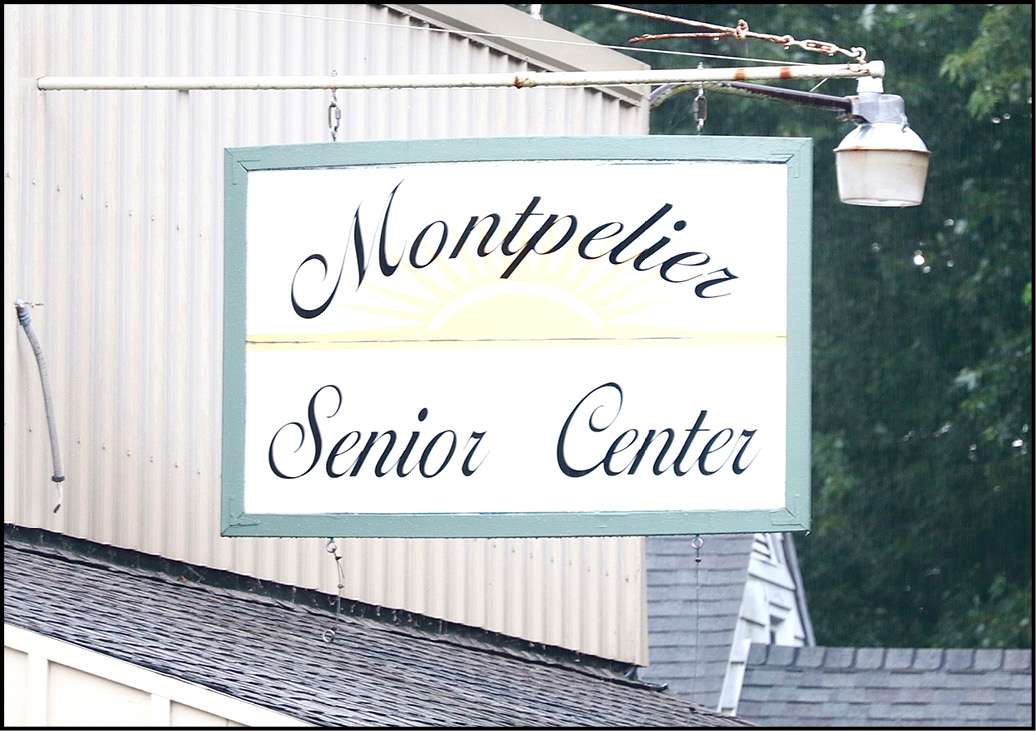
 PHOTO BY BRENNA WHITE / THE VILLAGE REPORTER
LEVY TALK … The Montpelier Senior Center is one of seven senior centers operating in Williams County.
By: Brenna White
THE VILLAGE REPORTER
brenna@thevillagereporter.com
After months of warnings that Williams County’s senior services are spending more money than they bring in, county officials are now putting together numbers for a possible solution.
The Williams County Commissioners and Department of Aging Executive Director Sarah Stubblefield held an extensive levy discussion on Thursday, July 9, 2026, to review several options for a potential property tax levy that could appear before voters on the Nov. 3 ballot.

The discussion centered on a possible 1-mill levy that would take the place of two existing Department of Aging levies. This would provide additional revenue for senior services across Williams County.
No final decision was made during the meeting. Before anything can be placed on the ballot, Stubblefield must formally request the levy, beginning a process that would include official action by the Williams County Commissioners. A final resolution would have to be approved and submitted to the Williams County Board of Elections.
WHY IS A NEW LEVY BEING CONSIDERED?
This levy discussion is the latest development in a financial issue commissioners and Stubblefield have been publicly discussing throughout 2026.
The Department of Aging operates Williams County’s senior centers while providing home-delivered meals, transportation, social services, benefits assistance, insurance guidance, and a multitude of other programs for senior citizens.
In 2025, the department reported serving 2,896 Williams County seniors and providing 137,718 meals, while its meal-delivery vehicles traveled more than 75,000 miles.
Those services have become increasingly expensive to maintain. Earlier this year, the department reported that it expects a shortfall of $140,000 in 2026, and is continuing to rely on cash reserves to support operations.
“We have a big cash reserve thanks to the years of conservativeness, but we are now over-spending and we have to do something major,” Commissioner Terry Rummel stated in a previous meeting.
At the same time, demand for some services continued to grow. Department figures presented in June showed that supportive services units have increased more than 300% in the last three years.
Units were described as assistance with things like benefit applications, equipment loans, or insurance help. In 2023, 387 units were reported. In 2025, that number jumped to 1,557, and continues to grow.
Although the Department of Aging receives federal and state-supported funding through the Area Office of Aging, that money represents only a small portion of its operating revenue.
“The Williams County Department of Aging is not funded 100% by tax levy,” explained Commissioner Bart Westfall.
“They do receive some money through the Area Office of Aging out of Toledo, and that funding has also been cut.”

“I don’t receive any money from the Commissioners,” Stubblefield stated in a March meeting. “There is no general revenue that comes to me. I am supported 70% with levy funds, 15% through the Area Office of Aging.
“Fifteen percent of my money comes from donations directly from the seniors who are using our services, or from the community who wants to support our program.”
Stubblefield also reported that the department’s nutrition funding, received federally, was exhausted by March of this year. This leaves levy dollars and donations to support food costs for the remainder of the year.
The department’s average cost to provide a meal has been calculated at $16.48. This includes the total cost of food, fuel for deliveries, and labor as well.


Meals are provided on a free-will donation basis, meaning seniors are not charged for these services.
WHAT WOULD CHANGE?
The Department of Aging currently receives revenue from four voter-approved property tax levies.
The proposal discussed on Thursday would affect two of those levies: a 0.5-mill levy passed in 2015 and a 0.1-mill levy approved in 2023.
Rather than continuing those levies separately, officials are considering taking them off the books and asking voters to approve a new 1-mill levy.

The existing 0.5- and 0.1-mill levies would no longer be collected, and the new levy would take their place at 1 mill.
This proposal is due in part to recent changes to Ohio property tax laws. Beginning in 2026, the state of Ohio no longer allows replacement levies, and requires local governments to ask voters to approve an entirely new levy.
Based on levy estimates reviewed during Thursday’s discussion, the proposed 1-mill levy would generate roughly $677,000 in additional annual revenue compared to the current levies.
WHAT WOULD IT COST TAXPAYERS?
The proposed 1-mill levy would not add an entirely new tax on top of the two existing levies it is intended to replace.

Williams County property owners are already paying taxes toward the existing 0.5-mill and 0.1-mill levies.
Under the proposal discussed Thursday, those two levies would be removed and the new 1-mill levy would take their place. The department’s other two existing levies would remain unchanged.
For the owner of a home with a value of $100,000, the four current Department of Aging levies cost around $34.29 per year.
Under the new proposal, including the new 1-mill and remaining two, the cost would be around $56.55 per year.

This means the increase for an owner of a $100,000 home would be $22.26 per year, or around $1.86 per month.
In other words, the proposal would not add a 1-mill levy on top of all four taxes residents are already paying.
Two existing levies would be removed, the new levy would take their place, and the Department of Aging would ultimately operate with three levies instead of four.
The final figure remains an estimate, and the cost would depend on the mill amount the commissioners decide to move forward with.


WHAT HAS THE DEPARTMENT DONE – AND WHAT HAPPENS NEXT?
Before asking voters for additional funding, the Department of Aging has already been looking internally for ways to reduce costs. Labor and food costs remain the biggest expenses.
Stubblefield has discussed reducing staffing expenses through attrition and restructuring, which includes reducing employee hours and how staff members are distributed among senior centers.
Earlier this year, the Pioneer Senior Center was used as a pilot location for a limited site manager.
While the Pioneer seniors were initially willing to try the change, the arrangement has left some locals unhappy with its overall effect.

The Department of Aging has also been reviewing eligibility and prioritizing services for residents with the greatest need.
Currently, 305 individuals participate in the home-delivered meals program. Stubblefield noted that last year, they were pushing almost 370 seniors participating in the program. “We have, for the last year, worked to get people either into the centers, or provided services to figure out if they don’t need our meals,” she explained. “We are trying to look at the priority list of people who are most in need.
“We’re going to look at the eligibility of individuals to make sure they really have a need for our services,” Stubblefield added.
“So that I know I am putting my service dollars to those who need it the most.”

Even with those changes, the department’s financial projections show a continuing shortfall. The cost of maintaining current services has grown faster than the revenue supporting them.
Commissioners and Stubblefield have consistently agreed they do not want to close senior centers or eliminate services.
They have also been equally clear that the department cannot indefinitely spend more money than it receives.
During a discussion held earlier this year, officials acknowledged that consolidating senior centers would reduce expenses, but Stubblefield emphasized the importance of maintaining community-based centers throughout the county.

“Everywhere I go, all the centers agree on one thing – a center close to them that has their own community feel to it.”
“It’s so hard as a commissioner to decide what does society want to pay for,” Rummel said in a previous meeting.
“Do they want more taxes for that service or do you want less taxes and less services?”