
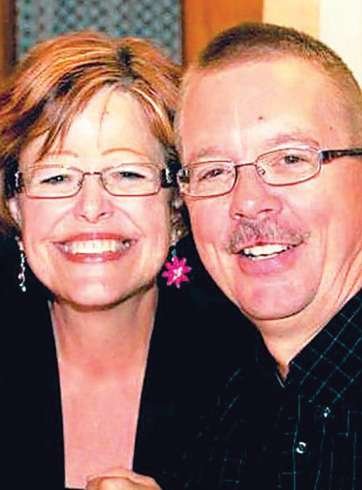
 By: Steve Wilmot
Edgerton, Ohio
“Who was that masked man?” Anyone who grew up in the ’50s or ’60s knows that’s the closing line to every episode of “The Lone Ranger.” The mask kept the TV crime-buster’s identity hidden.
Did you know there was a masked man in the Bible, too? When Moses descended Mount Sinai with the Ten Commandments, Exodus 34:29 records, “his face was radiant because he had spoken with the Lord.”
Verse 30 notes Aaron and Israel were afraid to come near him. Something about the radiance on his face scared them. So, Moses wore a veil—a sort of mask—whenever he walked among the people (vs. 33-35).

Moses took his mask off when he entered God’s presence. He came to God in complete honesty, openness and transparency. Nothing hidden. No posing or pretending.
But when he was around people, he put the mask on. Initially, it was to keep Israel from avoiding him because his glowing face scared them.
But there is a verse in the New Testament that reveals another reason Moses wore a mask. “Moses… would put a veil over his face to keep the Israelites from gazing at it while the radiance was fading away” (2 Corinthians 3:13).
Interesting. Moses put on his mask to hide the fact that the radiance of God’s presence was fading. The fire and passion for God wasn’t as strong as before.
Surprised? You shouldn’t be. Every day you rub shoulders with masked men and women. I’ll bet you even see one every morning in your mirror. We hide because we’re afraid for anyone to see the “real me.”

It’s what we do. We hide behind masks so others can’t see the real me behind the mask. The me who’s convinced God is upset with me after years of sin, and who doesn’t want you to feel the same way about me. The struggling me. The “not fine” me. The far-from-holy me. The lacking-in-faith me.
The fed-up me. The on-the-verge-of-divorce me. The angry or depressed me. The never-good-enough me. The guilty me. The me that’s lost hope. The me who wavers between Jesus and the world.
We’re afraid if others see the real me behind the mask, they won’t like us, and we’ll end up alone.
Or they’ll judge us and tell everyone what we’re so carefully trying to keep secret. Or it’ll prove Christianity works for others but not for us. (Of course we think it works for everyone else because they’ve not dropped their mask either.)
Here are a couple truths about masks. One, God always sees behind the mask, and he loves you anyway.
He knew the terrible things you’d do and the multiple times you’d break his heart. He loves you anyway. He doesn’t condemn you or kick you to the curb because you’ve messed up too many times. There’s no need to wear a mask around him.
Two, wearing a mask is a losing battle. Instead of hiding, turn on the light. Darkness flees when you take a risk and drop your mask and let someone see you. The real you.

How do you do that? You tell someone what’s really going on in your life. You make yourself vulnerable. The heartache, the unsolved problems, the things you’re ashamed of, the sin habit you still have after all these years, those memories that keep you up at night, your fears and anxieties. You can’t get help if you’re the only one who knows what’s going on.
In 1 John 1:7, God promises two things when we “walk in the light,” i.e., live without a mask. “If we walk in the light as He is in the light, we have fellowship with each other (our relationships with each other grow stronger because we’re fighting a common enemy together), and the blood of Jesus his son cleanses us of all unrighteousness (we begin to find answers and healing for those things we’ve kept hidden all these years).”

Here’s a question from “The Cure,” to ponder: “If this life of Christ in us is true—if there is no condemnation, if He’s perfectly working to mature us from the inside out, and if He’s absolutely crazy about us despite all our stuff—why would any of us ever put on a mask again?”
Why, indeed?
———————–
Steve Wilmot is a former Edgerton, Ohio area pastor who now seeks “to still bear fruit in old age” through writing. He is the author of seven books designed to assist believers to make steady progress on their spiritual journey.