
 PHOTO BY JESSE DAVIS / THE VILLAGE REPORTER
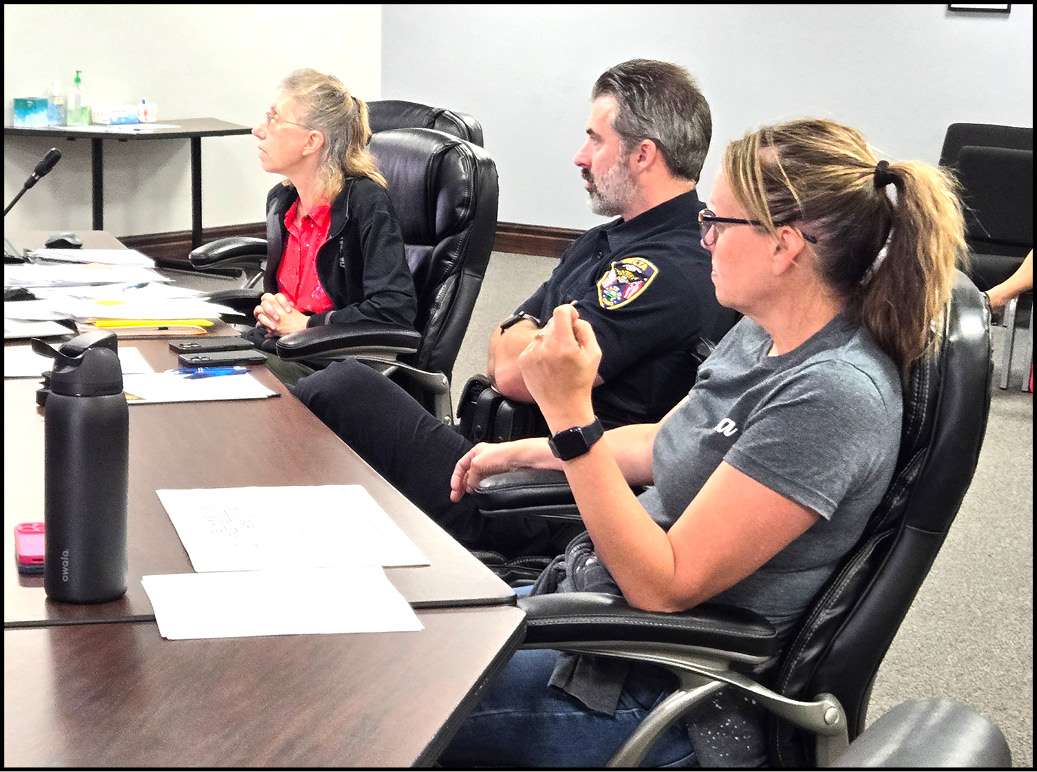
WHERE DO WE GO FROM HERE … Delta Finance Director Joanne Clapp (left) gives an update on the village’s financial woes and efforts to right the ship during Monday’s meeting of the Finance Committee.
By: Jesse Davis
THE VILLAGE REPORTER
jesse@thevillagereporter.com
Delta’s negative general fund balance, attempts to push it positive, and brainstorming more options to pursue were the focus of Monday’s meeting of the Delta Village Council’s Finance Committee.
According to Finance Director Joanne Clapp, the general fund had a balance of -$251,141.22 at the end of June.

With estimated revenue of just over $168,000 expected before the end of the year and almost $146,000 in wages to be paid out, she estimated the year-end balance to be just shy of -$229,000.
Clapp said the police fund had a balance of almost $435,000 at the end of June thanks to a $600,000 transfer from the general fund, from which it receives much of its regular funding.
With expenses for the remainder of 2026 estimated at $421,514 and expected revenue of approximately $102,000, she estimated a year-end balance of roughly $116,000.
That does not include part-time employees, supplies, training costs, or other expenses.
Due to the village’s financial woes, administration has pulled out all the stops and is looking at all options to stop the bleeding and get the general fund back into the black.
Cleaning services have been canceled, with the work now completed by village staff; the cellular service provider for the village has been switched; staff are looking into a possible change in the internet service provider; and the police department is not hiring to replace a recently departed officer.
“We’re trying everything we can, we’re open to suggestions of what else can we do,” Clapp said.
Committee members voted to pass on to the full council a pair of ordinances aimed at propping up the general fund.
The first was to begin the process of bringing to voters a ballot item shifting an existing 0.5 percent income tax from the water fund to the general fund for police department and other expenses.

If voters turn down the measure, the funds would continue to be deposited in the water fund.
The second was to stop billing village departments for their use of municipal water. Clapp said the measure was explicitly authorized under state law. She said all departments except parks have been charged since 2010.
During the subsequent council meeting, both measures were passed — the first on an emergency basis due to the limited time to get it on the ballot, and the second on first reading.

Committee members also considered several other options for increasing revenue or reducing costs.
The idea with the most impact on residents was the possible elimination of a reciprocal tax benefit, whereby a resident who works in another village and pays income tax there could reduce their income tax paid to Delta by that amount.
The example given was a person who paid a 1 percent income tax in Wauseon, who could currently then pay 0.5 percent to Delta instead of the full 1.5 percent.
Another topic was the village-owned property at 500 South Madison Street, which has been leased to Kigar Realty and Auction for $1 per month since 2018.

The current lease is set to expire at the end of November, and committee members discussed the possibility of bringing it up to a market-appropriate level.

Clapp also recommended not creating a tax increment finance district for the new Delta Acres development.\
She said there are pros and cons to the districts, but warned against authorizing any kind of reduced tax payment in the current environment.
Under such a district, taxes would still be paid on the beginning value of the property, but any potential increase due to increased property values would be waived for a period of time in exchange for the developer covering the cost of putting in infrastructure such as roads and utilities for the project.

Mayor Allen Naiber said the developer is currently waiting to begin construction on the project until the village approves a TIF district, so taking Clapp’s advice could kill the development.
Committee members also raised the possibility of selling a piece of property owned by the village that was once a park.
Clapp reported that if, once the audit of the village is completed and it is declared to be in a state of fiscal distress, Delta has 10 years to right the ship before it would go into receivership with the state.
“Receivership is a legal process under Ohio law that allows the state to step in when a municipality, county, or township is experiencing severe financial distress.

When prolonged fiscal emergencies or mismanagement prevent normal recovery, a court can appoint a receiver to assume specified financial powers and help restore fiscal stability, acting as a neutral fiduciary to safeguard public funds and protect essential public services for residents,” according to the state auditor’s website.