
 PHOTO BY BRENNA WHITE / THE VILLAGE REPORTER
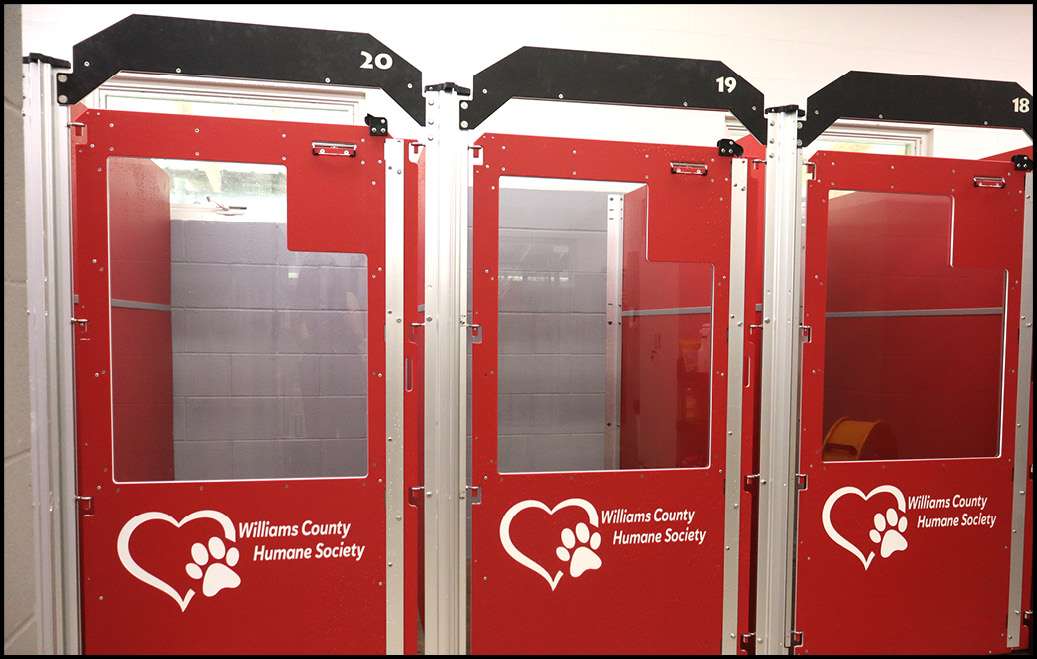
RENOVATION … The new kennels at the Williams County Humane Society are designed to house dogs in a safer and calmer environment, while also bringing a fresh new look to the building.
By: Brenna White
THE VILLAGE REPORTER
brenna@thevillagereporter.com
The Williams County Humane Society is getting a major upgrade, with $40,000 being invested into new dog kennels designed to improve safety for both the animals and the people caring for them.
While the new kennels provide several everyday benefits, the project was also prompted in part by changes to Ohio law that expanded procedures surrounding dangerous and vicious dogs.

House Bill 247, also known as Avery’s Law, was signed into law in December 2025 and took effect March 20, 2026.
The law overhauled several portions of Ohio’s dangerous and vicious dog laws, including how dogs are designated and handled while court proceedings are underway.
The law was named after Avery Russell, an 11-year-old girl who was severely injured during a dog attack in Reynoldsburg, Ohio, in 2024.
One important change under the new law involves what happens immediately following a serious incident.
Previously, the process surrounding the removal of dangerous or vicious dogs would depend heavily on court proceedings.
Under the new revised law, dog wardens have additional authority within the designation process, and a dog may be housed at the county dog pound while a case and any appeal are pending.

This applies if the warden determines it is not safe for the animal to remain with its owner.
Although Williams County does not frequently encounter situations involving vicious dogs, the changes prompted officials to look at whether the Humane Society was prepared to safely house one if the need came.
The facility’s existing kennels were made primarily of traditional chain-link fencing. While the Humane Society was already in compliance, officials wanted to go beyond the minimum requirements and create a safer environment as responsibilities surrounding dangerous dogs changed.
The difference between the old and new kennels is substantial. Instead of chain-link walls separating dogs, the new kennels feature solid panels that prevent neighboring dogs from seeing or making contact with one another.
The fronts are also enclosed, with secure doors and locking mechanisms.
The design makes it much more difficult for someone to reach a hand inside a kennel and reduces opportunities for a dog to bite through fencing. The kennels are also designed to prevent dogs from climbing or jumping out.

Those features will be particularly important if the Humane Society is required to house a dangerous or vicious dog, but the improvements are expected to benefit every animal that comes through the facility.

The solid barriers reduce visual contact between neighboring dogs, which can lower stress and prevent “fence fighting” between animals.
The project was not a small undertaking. At around $40,000 after installation, Dog Warden Kinsley Martin described the kennels as a major financial decision that came after research, discussion, and organization.
For Williams County, the new kennels serve as a proactive step toward being prepared for dangerous situations rather than waiting until one occurs.

At the same time, the investment gives the Humane Society a safer and less stressful environment for the many dogs it houses that have nothing to do with Avery’s Law.
Installation of the new kennels is still currently underway, and the Humane Society also plans to offer sponsorship opportunities for the kennels once the project is complete.